
Thomas Spitze’s Coal trilogy is a great example on how board games are much more than a source of entertainment. Transforming history into a playable experience that takes players into the history of coal mining and industrialization in the Ruhr region. All three are Eurogames that emphasise strategic decision-making, resource management, economic development, and long-term planning.
If you are looking for historical-based board games, the coal trilogy is a must-have in your board game library.
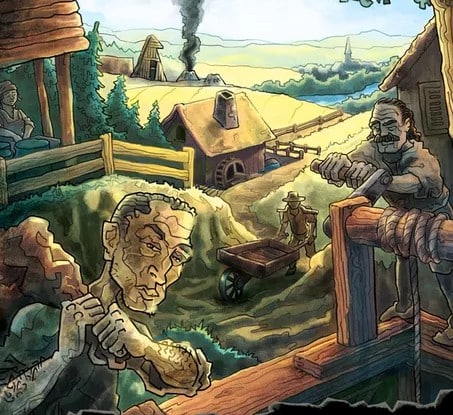
Haspelknecht: The Story of Early Coal Mining (2015)
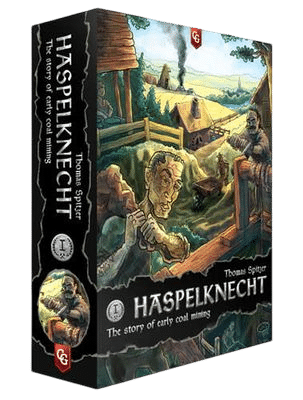
👤 Players: 2-4
🕑 Duration: 90 min
⚔️ Competitive
Haspelknecht: the Story of Early Coal Mining is a competitive board game in which players take the roles of farmers with the opportunity to exploit the coal in their lands in the southern part of the Ruhr region of Germany. Players will expand their farms and dig to extract coil. To win they must balance a delicate equilibrium of multiple strategic paths to victory. Due to its modular set up, the game is highly replayable. The technology tree changes every single game, demanding new strategies to win.
Drafting and worker placement.
Players must pull discs representing resources or workers from a central pool. Taking discs of one colour allows the player to perform specific tasks. When using workers, these will navigate the underground grid, breaking through soil layers to reach deeper coil deposits.
Resource management and income management.
Players must balance food production, wood harvesting and mining to feed their workers and reinforce unstable mine tunnels. Also, at the end of each round, players must pay taxes to the local lord based on their coal production and maintain their farm’s infrastructure.
Haspelknecht: The Ruhr Valley
Haspelknecht: The Ruhr Valley is an expansion for the first game of this coal trilogy. It continues the historical evolution in which the era of superficial digging is over. Coal mining has transformed from a side quest to a highly lucrative business for the farmers of the Ruhr Valley. The regional economy has changed and now most of the population earns their living exclusively from mining. This expansion introduces new layers of strategy and 21 brand-new development tiles to explore.
Haspelknecht: The Foreman Promo Tile
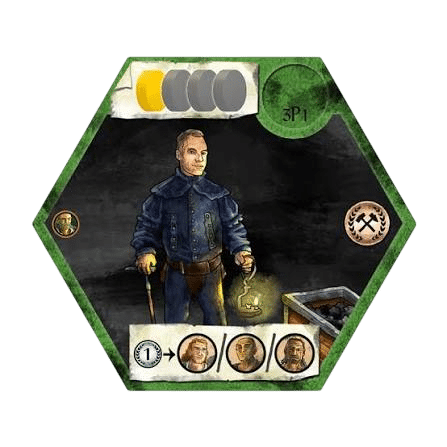
The Foreman promo tile is an exclusive promotional mini- expansion for the main game. This tile introduces another tactical layer to the player’s workforce management. When you acquire the Foreman, you gain the unique ability to push your labour force to its limits. By Spending 1 victory point, you can immediately reactivate one of your contract workers, unlocking vital actions at critical moments.
The Ruhr: A Story of Coal Trade
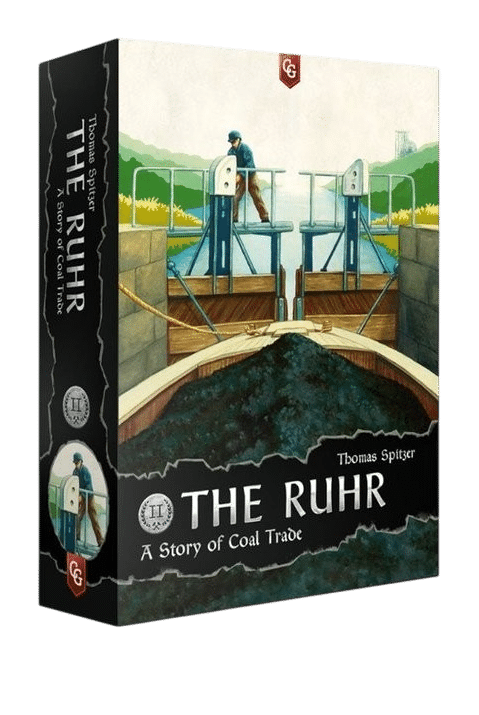
👤 Players: 2-4
🕑 Duration: 120min
⚔️ Competitive
The Ruhr: A Story of Coal Trade is a historical and economic strategy board game, the second of this Coal trilogy. Set in the Ruhr region during the 18th and 19th centuries, after Haspelknecht. The players take the role of coal traders who transport coal along the Ruhr River. The river is difficult to navigate because of dams and other obstacles, so players must plan their routes and investments.
You’ll sell coal to cities and factories, acquire progress markers that improve their capabilities, build warehouses and locks, and export coal to neighbouring countries.
Network building and area control.
Players must plan transportation routes along the Ruhr River and construct warehouses and locks to improve the network. Transport coal from mining areas to cities and factories where it can be sold.
Resource and economic management.
Players manage coal and money, sell resources to generate income and invest in upgrades. This will improve their economic capabilities over the course of the game.
Scoring and victory points.
Players collect progress markers and develop their position along the river while choosing how to use their investments and exports to maximise their final victory points. To win the game, you’ll have to accumulate victory points. After the game ends its final round, players calculate their final points from their developments, buildings, exports, and other scoring elements.
The Ruhr: The Ohio
A standalone game included as an expansion with the Ruhr. The game keeps the basic economic and transportation ideas of the main game. However, it moves the setting from the Ruhr to the Ohio River in the USA during the 19th century. It also introduces new rules and additional elements, giving players different strategic possibilities rather than simply being a new map.
Kohle & Kolonie
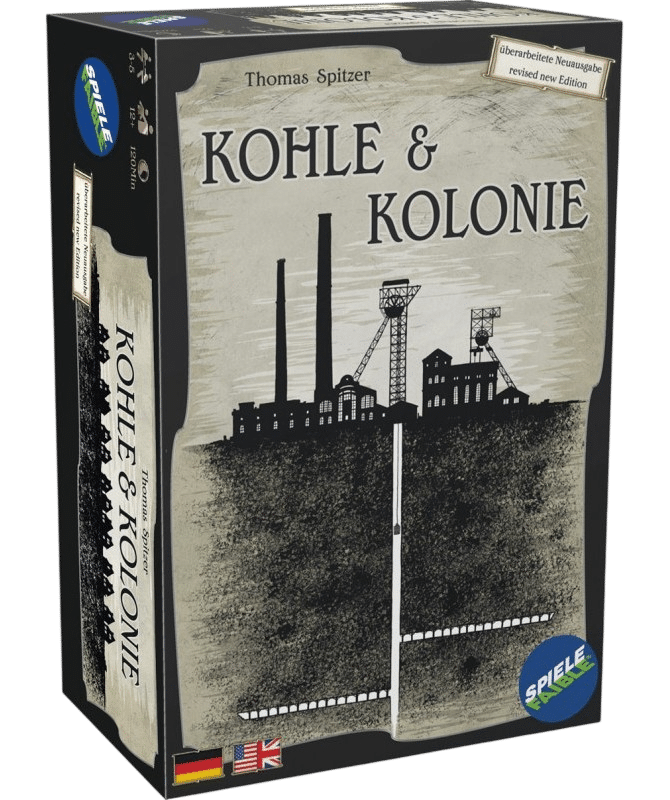
👤 Players: 3-5
🕑 Duration: 180 min
⚔️ Competitive
Kohle & Kolonie is the third title of the coal trilogy. An economic strategy game set in the 19th and early 20th centuries during the industrialization of Germany’s Ruhr region. Players manage small coal mines around Essen, Hattingen, Bochum, and Witten. The player will develop these regions in preparation of their eventual consolidation into larger mining companies. The goal is to build a strong operation and gain control of the most valuable consolidated mines.
Resource management and worker placement.
Players must manage money and workers, ensuring that their mines have enough resources to operate and develop.
Network building and development.
Players modernise their mines and construct and maintain a railway infrastructure connecting the mining operations. Development will increase the mine’s value when they are consolidated.
Risk management.
You’ll face the decision of how much to invest in their mines to reduce the risk of mining accidents. You’ll need to balance investment and risk while preparing to bid control of larger mines.
Revised edition (2025)
The revised edition of Kohle & Kolonie updates the original game rather than changing its core concept. The main differences are revised rules and scoring, updated bonus tiles, changes to the mine-disaster system, and a reorganised rulebook.
Culture and History in Board Games
Board games are not only a form of entertainment, they are also a form of culture. Board games reflect places, societies, ideas and historical periods that inspire them. They preserve aspects of the past while also interpreting them through rules, mechanics and decisions. Historical board games also have an important educational value, providing players with an interactive way to explore historical events, social structures and everyday life. In this way, board games can complement traditional forms of traditional learning.
Join us and find other players that enjoy cultural and historical board games.
Game on!
- Invokyr A Video Game about a Forgotten Board Game
- Dressmaker, The Fashion Game that’s Conquering the Internet
- One Piece Escape from Egghead, A Strawhat Adventure

- The Sift, The New Dimension in Minecraft Dungeons II

- Microsoft Files a patent to insert Ads while you play

- Thomas Spitze’s Coal Trilogy For History Enthusiasts