Star Citizen is one of the longest-running games in history. A giangantic project by Cloud Imperium Games that has been in development for fifteen years and is currently only available to players via early access.
However, after more than a decade of development and over a $1 billion raised through crowdfunding, the gap between the game’s ambitions and its current state of development is becoming harder to ignore. For the player base that has spent years waiting for promises to become reality, the live stream of August 8 was yet another reminder of just how far Star Citizen still has to go.
Everything That Happened During Star Citizen’s Live
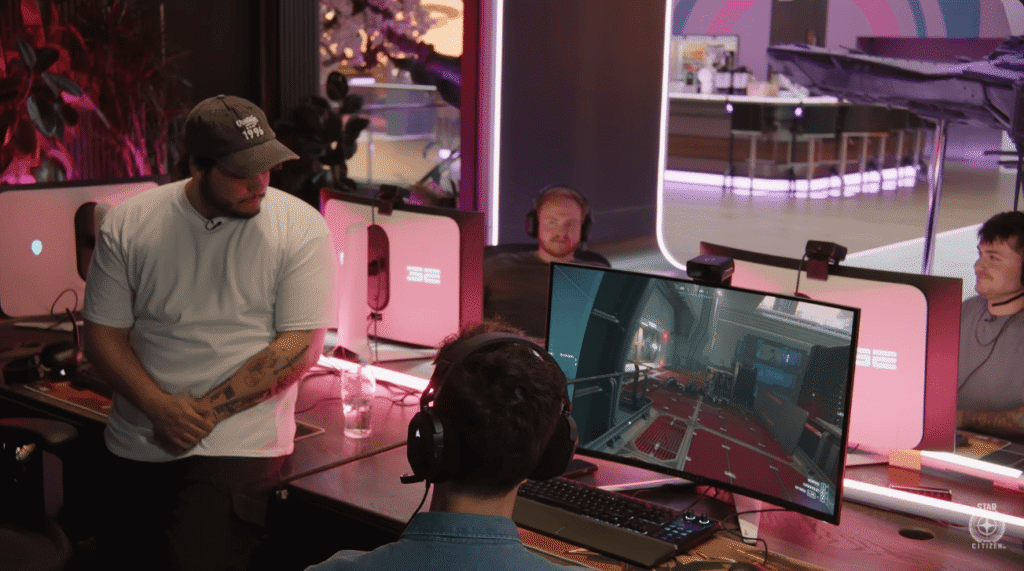
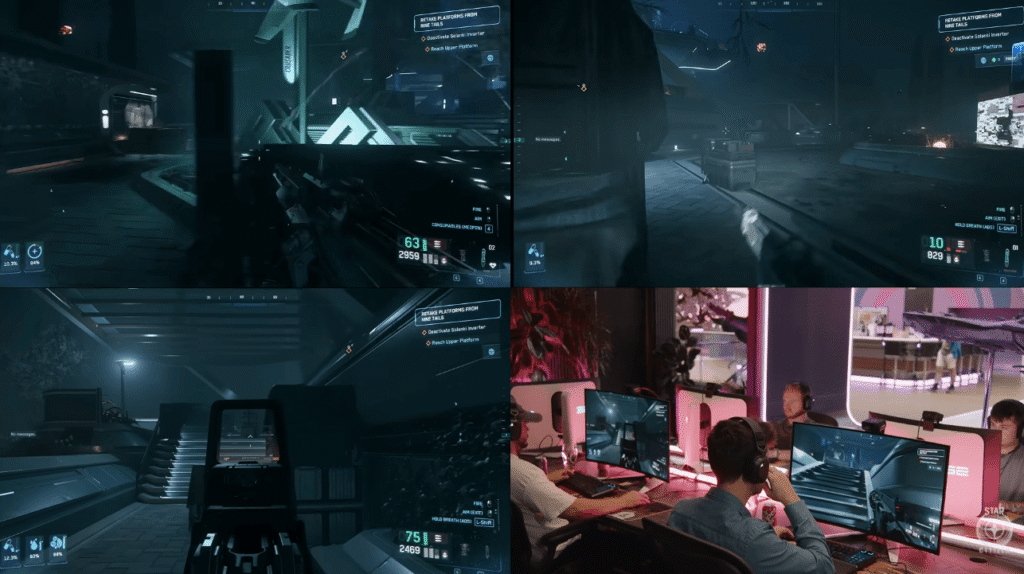
On 8 August, the Star Citizen team held a live stream. During the live steam they were due to broadcast gameplay from Siege of Orizon. We say ‘were due to’ because, although the team initially acknowledged users’ complaints about the game’s glitches, their plan was to showcase the gameplay using an internal build:
“There’s been a lot of conversation about whether or not we are going to be playing live on the servers, or in a private build […] We recognise the current state of the PTU. […] playing today on the PTU doesn’t really do what we want to do today, so we’ll be playing on an internal build. This is the game as it’s designed to work.” – Jared Huckaby, Star Citizen Live | Gamedev: Siege of Orizon. Video transcription 0:49 – 1:27
A decision which, far from exciting its player base, as they could experience and the way “the game is designed to work”, led to an increase in negative comments.
A Live Stream Full Of Bugs And Uncomfortable Moments
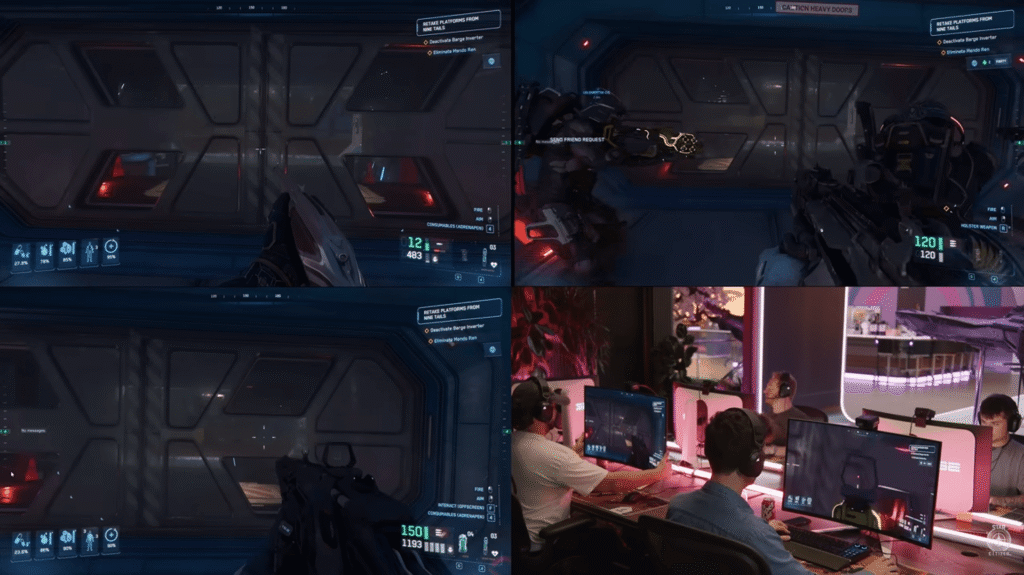
The glitches and lag in the video were among the most obvious issues. Highlighted by the community and also experienced by the development team during the live stream. The gun’s sight and trigger wobbled every time the players tried to take aim.
“And I think initially we were also thinking , like we want to throw people directly in it. We want to have enemies directly as you get out of the shuttle. And then we actually noticed that people were getting, we were gettin overwhelmed, a little bit. Because there was no time to kind of position and plan.” – Star Citizen Live | Gamedev: Siege of Orizon. Video transcription 14:30 – 14:43
Whether it was a dev decision to “dial it back” and give players a little bit more room to plan, the result shown during the live stream suggested another thing entirely. Initially, the enemy barely moves, fires at the players or even interacts with the players when approaching.
Time clutches trapped the devs with no possibility to react or move. Also some levers and props were unusable during the game.
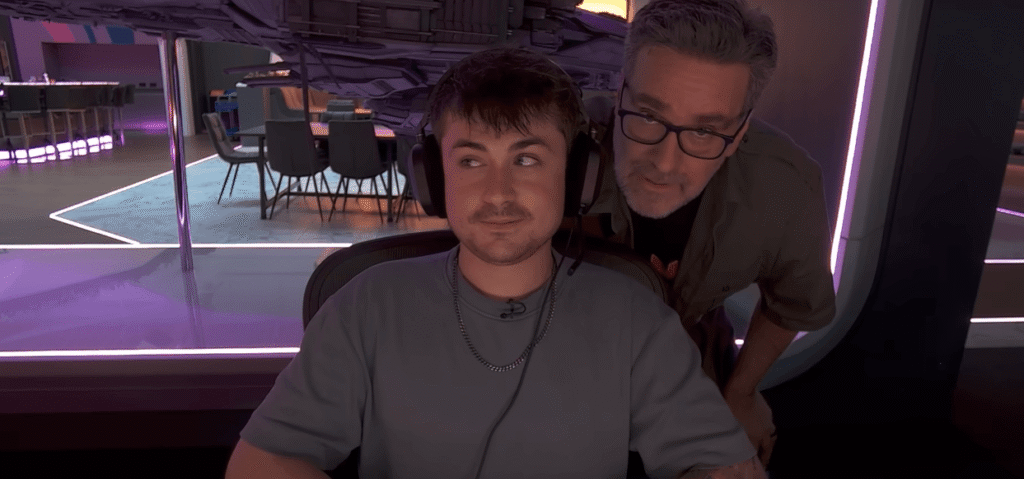
The live stream, which lasted almost two hours, came to an abrupt end. After numerous in-game glitches and the deaths of most of the team members during the boss fight. The presenter then handed over to the players so they could say their goodbyes. One of the developers admitted that the game still has quite a few issues. The presenter reappeared and promised that once the bugs are fixed, the gaming experience will be even more epic. He also urged players to sign up on the PTU and send bug reports on anything they find.
15 Years Of Game Development
Star Citizen was announced as a project in 2012. Fifteen years and $1 billion later, the game is still only in early access. The general reaction following the live demonstration of Siege of Orizon has left fans feeling rather disheartened.
Lots of bugs within the game appear even in a closed, controlled environment. It’s a game that seems broken despite years of development and substantial investment in the project. Doubts are resurfacing amongst players as to whether the project will ever see the light of day.
Many are pointing out that the financial success did not reduce the project’s ambition, it increased it. The campaign ceased to resemble a conventional way of funding a video game and began to evolve into a permanent funding system. The initial idea of a relatively imminent launch was gradually left behind as new systems, ships, planets, professions and technologies were incorporated. Star Citizen went from being a project with specific objectives to becoming a complex universe that continued to expand throughout its development.
Meanwhile, Cloud Imperium Games continues to work on its Squadron 42 campaign, which is scheduled for release this year (2026) on PC and consoles.
How Long Should Players Keep Believing in a Promise?
Star Citizen is not the only example of a long and costly project for which players must wait to see the result. We have seen other examples of video games that have spent years in development, with delays, changes of direction and promises that took far longer than expected to materialise. The question being raised at this point is not a new one and, depending on the project, it can have very different answers.
Regarding Star Citizen, the project’s difference from others in the industry is highlighted by its crowdfunding model. Players are not merely future consumers awaiting the game’s release. Many have been directly funding its development for years. The relationship between the studio, the developers and the player community is much more special and close-knit in this context.
This is the question we’re putting to you, we’d love to hear what you, the players, think.
Join us and explore a community built by gamers for gamers. Follow us for more guides, news and curiosities all about board games and video games.
Game on!👨🚀
- Invokyr A Video Game about a Forgotten Board Game
- Dressmaker, The Fashion Game that’s Conquering the Internet
- One Piece Escape from Egghead, A Strawhat Adventure

- The Sift, The New Dimension in Minecraft Dungeons II
- Microsoft Files a patent to insert Ads while you play

- Thomas Spitze’s Coal Trilogy For History Enthusiasts