Solo board games are growing in popularity. So much so that many multiplayer board games now also include a solo mode. If you want to explore solo gaming and choose the right solo board game for you, this guide will help you understand where to start and what to look for.
Misconceptions about Solo Board Games
“Solo board games lead to isolation”
⭕False. Playing alone isn’t the same as being isolated. Solo board games are another form of entertainment. There are many reasons why someone might venture into solo board games. It could be because their friends have busy schedules and can’t play as much as they would like. Or perhaps the game the player is interested in simply suits their particular tastes and it is best enjoyed solo.
Does this mean that you would say no to play multiplayer at any other time? Of course not.
“Multiplayer solitaire games are the same as solo games.”
⭕False. Multiplayer solitaire games are board games that require more than one player, but where players do not directly interact or interfere in each other’s strategies. This mode of play serves several purposes, one of the most important: they avoid toxic competition and confrontation. However, these are not solo board games. Playing multiplayer solitaire still requires more than one person and to gather around the table.
“Solo board games take a long time to learn.”
⭕False. Not all solo board games are complex or difficult to learn. These games come in a wide range of complexities, from quick and accessible to deeper strategic games. In fact, playing solo can sometimes make learning a game easier. You can take your time, experiment with different strategies without having to worry about holding up to other players.
“Solo Board Games are for experienced and serious gamers.”
⭕False. There are all sorts of solo board games designed for all levels of experience. Including accessible tiles that are easy to learn and suitable for people who are completely new to this category.
Types of Play in Solo Board Games
True solo
True solo is a type of solo playing in which you control one single character or faction. The game is designed to be played by one player, with them taking responsibility for all decisions and actions. In a true solo board game, the experience is centered entirely around the player’s individual choices. This creates an immersive experience that lets you focus on exploration, adventure, and storytelling.
Legacy of Yu
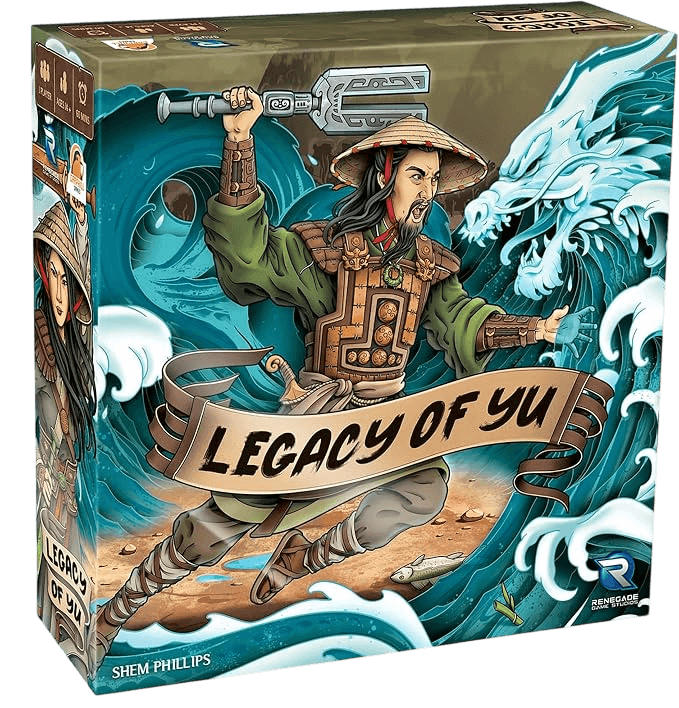
👤Players: Solo
🕒Duration: 60 min
Legacy of you is a true solo, fully-resettable, nonlinear campaign game. The player takes the role of the legendary hero of the Xia Dynasty, Yu the Great. You’ll need to build canals ahead of the impending flood, while also defending your growing village against barbarian tribes. With each game you play, new stories will be shared and elements added. The campaign features a self-balancing system and ends once you either win, or lose seven games.
Multi-handed Solo
Similar to true solo, but with one clear difference. In multi-handed solo games, the player controls two or more characters, factions or game roles within the same game.The player takes several actions that must complement each other and work towards their overall strategy.This style of play allows a single player to experience games that are designed around multiple characters or roles. The character dynamics might be asymmetric, making the player consider how characters can balance each other, or complement each other’s actions. This playstyle adds strategic depth to the game.
Nightmare Cathedral
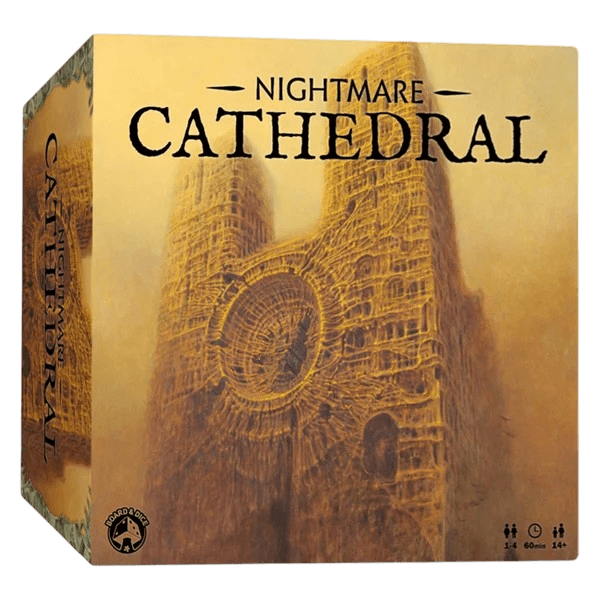
👤Players: 1-4
🕒Duration: 60 min
Nightmare Cathedral features a multi-handed solo mode that challenges you to manage resources, control the map, complete objectives, build fortifications and advance along the ritual track. During the first stage, the nightmare cathedral is built piece by piece; once completed, powerful nightmares emerge and begin devouring units. However, you can also take control over the nightmares and use them strategically. The game ends when the time track reaches its limit, the ritual track is completed, or a certain number of units have been devoured.
Beat-Your-Own-Score
Beat- your-own-score games challenge the player to achieve the best result they can, rather than directly competing against another player or opponent. The game typically gives you a scoring system, a target, or a set of objectives to complete. Your goal is to improve your performance with each play. The challenge balances between your own decisions, moves and risk taking, and the game’s scoring system. This type of solo board game sparks replayability by competitiveness.
Le Havre
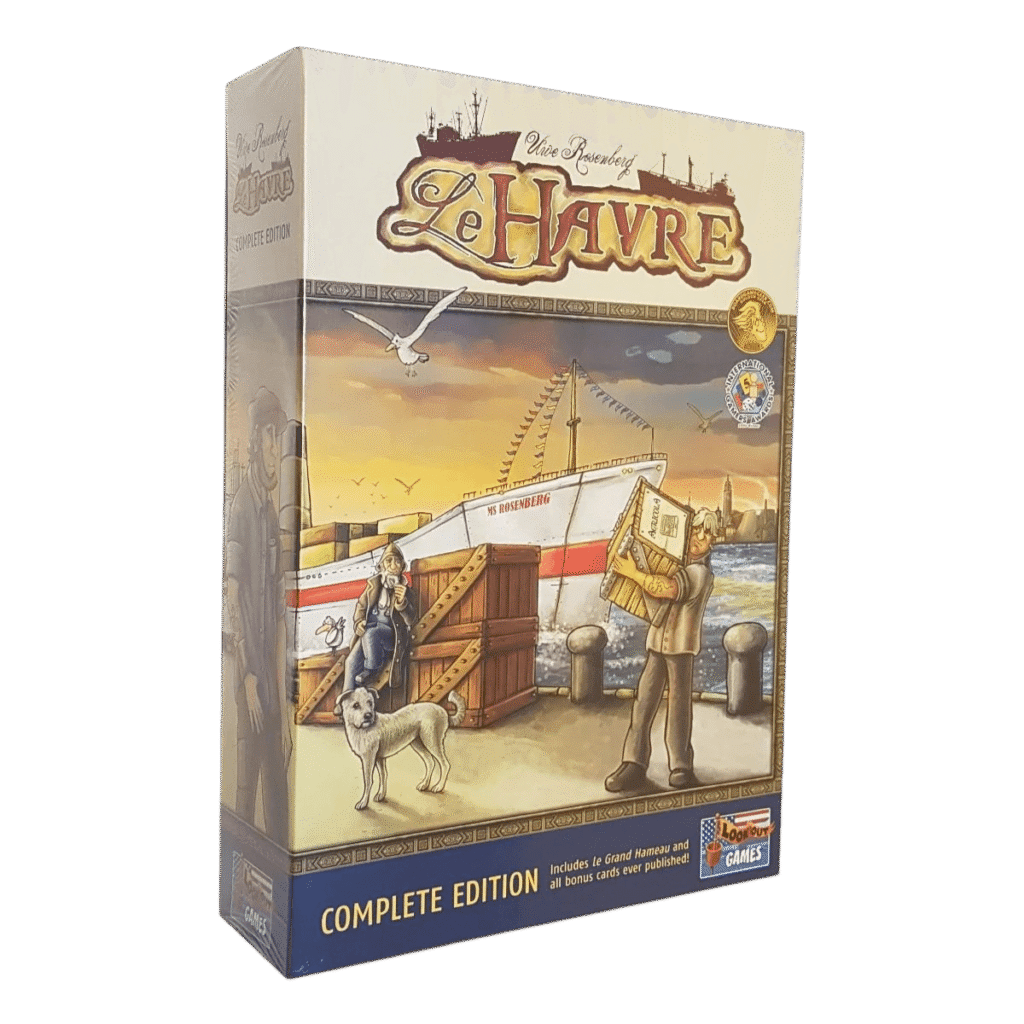
👤Players: 1-5
🕒Duration: 30-150 min
Le Havre is a strategic management game set in a French harbour, where you build ships and buildings to grow your shipping empire. Collect and manage resources to construct and use new buildings while balancing worker payments and saving for ships. Buildings offer valuable investments and abilities, while ships provide essential income. Careful resource management and planning is crucial to win the game. With an in-depth tutorial and hint system, the game makes it easy to learn and to identify the right decisions.
Dummy player
A dummy player refers to the mechanism a solo board game introduces that represents an additional player, without requiring another person to participate. The solo player only controls their own character or faction, while the dummy player follows a set of predefined rules or instructions. This system allows games designed for multiple players to be adapted for solo play while maintaining some of the interaction, competition or board presence normally created by having another player at the table.
Teotihuacan: City of Gods
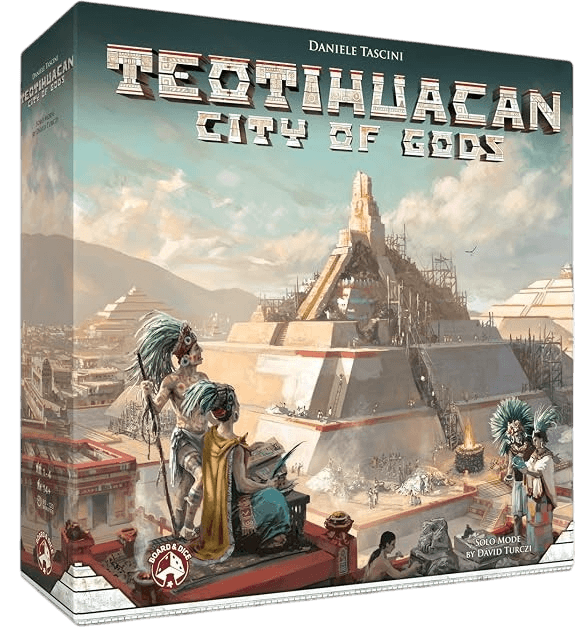
👤Players: 1-4
🕒Duration: 160 min
Teotihuacan: City of Gods’ solo mode challenges you to manage a workforce of worker dice that grow stronger with every move while competing against a dummy player. On each turn, you move your workers around a modular board and choose between an action or a powerful bonus. You must carefully manage resources, develop technologies, climb the three great temples, build cities for their inhabitants and contribute to the construction of the Pyramid of the Sun. Your goal is to maximise your fame and outperform the dummy player.
Autonoma Opponent/AI Opponent
An Autonoma opponent or Ai opponent is a solo board game with a game-controlled opponent to act as an opposing player.The game uses a set of rules, cards, actions and other mechanisms to determine what the opponent does. Its behaviour is controlled by the game’s system, allowing you to experience competition and interaction without needing another human player. An Ai opponent creates the experience of playing against another player without requiring a second person.
Churchill
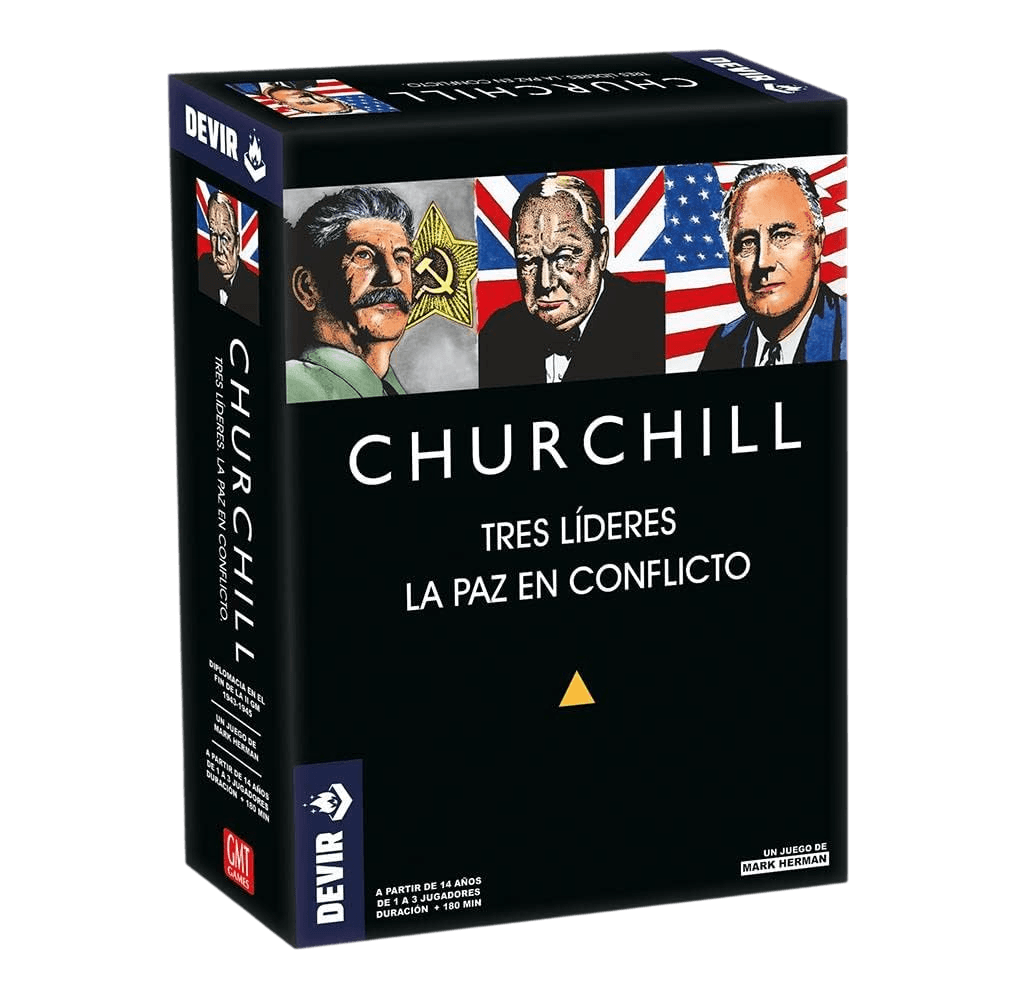
👤Players: 1-3
🕒Duration: 150-300
Churchill, in solo mode, recreates its political struggle through an Autonoma Opponent. This allows you to experience the game’s negotiations and power struggles without requiring three human players. You take the role of one of the allied leaders and compete across a series of conferences to influence decisions about military offensiveness, production, clandestine operations, political activity, and strategic warfare. The ultimate goal of the game is to gain greater control over the defeated Axis powers and win the post-war peace.
Adaptations to Solo Mode in Board Games
Of course, not all board games are designed to be played by one person. As solo gaming has become more popular, many multiplayer board games have added solo modes that adapt the original rules and mechanics for a single player.
These adaptations can take different solo forms, as expired earlier. Other games may add a specific system that replaces the actions or decisions normally made by another player. Some adaptations require only a few changes to the original rules, while others can substantially alter the gameplay.
With its rise in popularity multiplayer games are adding solo modes has almost become the new norm. Although often misunderstood as a more complicated or more difficult mode, it actually is an opportunity to explore a different side of the game.
Start Exploring Solo Board games
Solo board games offer a unique way to enjoy the play. A new view of the strategy, the challenge, and immersion of tabletop gaming, entirely at your own pace. Solo mode also encourages you to try new game mechanics and learn new games. Whether you prefer resource management, tactical puzzles, or competing against an AI opponent or dummy player, there is a solo experience for every kind of player.
If you are thinking about venturing into the vast world of solo board games, join us in Gamers.Online and start discovering the games and experiences that make solo board games so rewarding.
Game on!🎲🃏
- Invokyr A Video Game about a Forgotten Board Game
- Dressmaker, The Fashion Game that’s Conquering the Internet
- One Piece Escape from Egghead, A Strawhat Adventure
- The Sift, The New Dimension in Minecraft Dungeons II
- Microsoft Files a patent to insert Ads while you play

- Thomas Spitze’s Coal Trilogy For History Enthusiasts