Set sail into the world of One Piece Card Game. In this guide we’ll explore the main card types, introduce the most common archetypes, and walk through the essential steps to building your own One Piece deck.
Whether you are a newcomer discovering the game for the first time, or a fan looking to improve your skills. Understanding the different card types and how to build a deck is the first step toward becoming a stronger player.
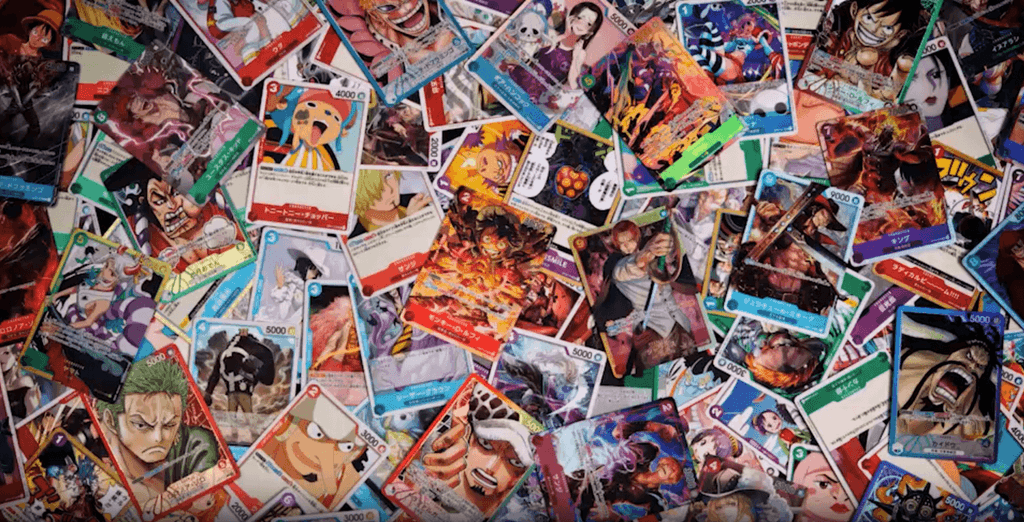
Types of cards on One Piece Card Game
Leader Cards
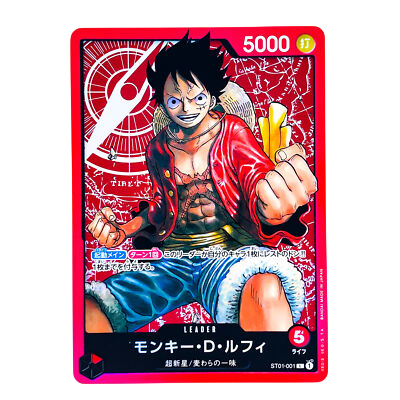
Leader cards are the foundation of the One Piece Card Deck. It determines the deck’s overall strategy and influences which cards the player can include. The leader can attack the opponent and use special effects that help the player gain advantage during the game. These leader Cards also display your starting life value which determines how many Life Cards you receive at the beginning of a match.
Every Leader Card has the following indicators:
- Power, on the top right part of the card. Indicates the Leader’s attack power. During battles, the attacking and defending cards’ pòwer values are compared to determine the outcome.
- Attribute, next to the power indicator. Indicates the Leader’s combat attribute, such as strike, slash, special, ranged or Wisdom.
- Colour, which determines the colours of cards that can be included in the player’s deck.
- Card Name, below the illustration. Displays the name of the characters represented.
- Card Category on the left down corner, that identifies the card as a leader.
- Life, number displayed to the right of the name. This number indicates how many life cards you can receive at the beginning of the game.
- Card Number on the right down corner of the card, that identifies its set or expansion.
- Block Symbol next to the card number, relevant to tournament legality.
- Effect, describes the leader’s special abilities, which can provide strategic advantages during the game.
DON!! Cards
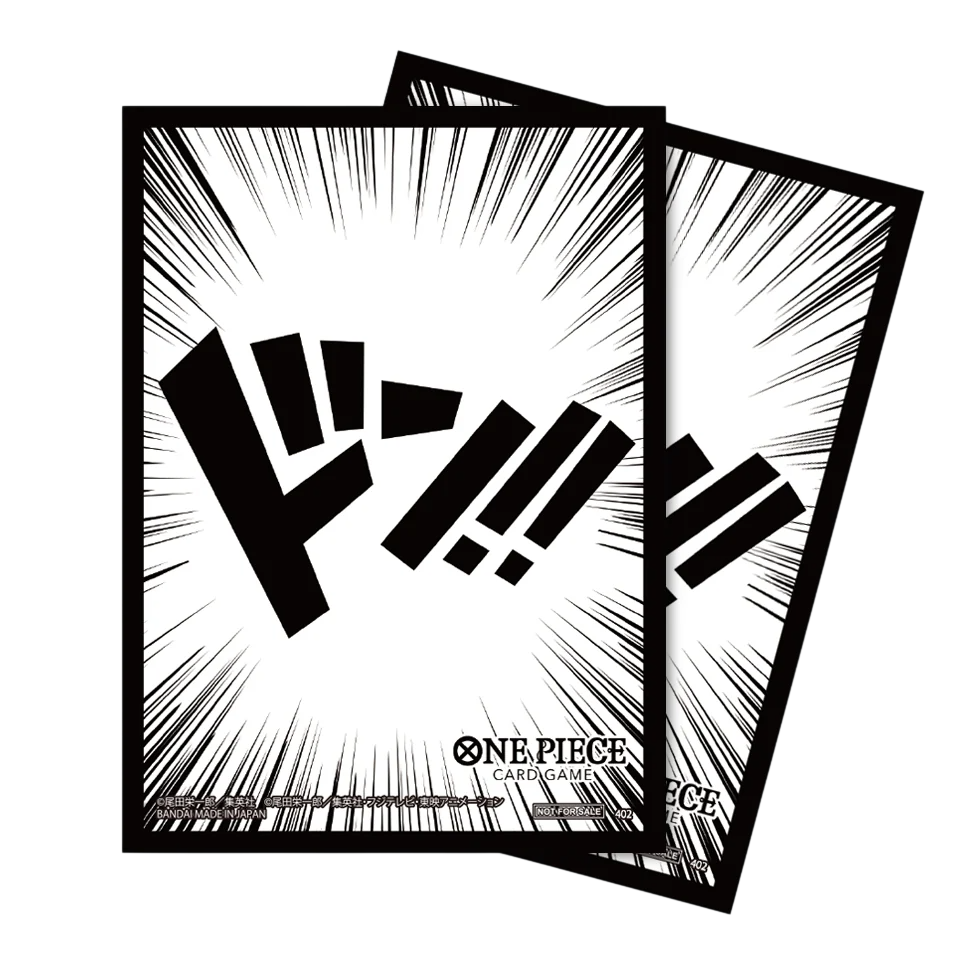
DON!! Cards are the primary used to play cards and activate effects. Each turn, players can gain DON!! cards and attach them to their leader or characters. These will increase their power during battles. Managing DON!! effectively is very important, as you must decide whether to spend resources on playing new cards, strengthening your attacks, or saving them for future turns.
Character Cards
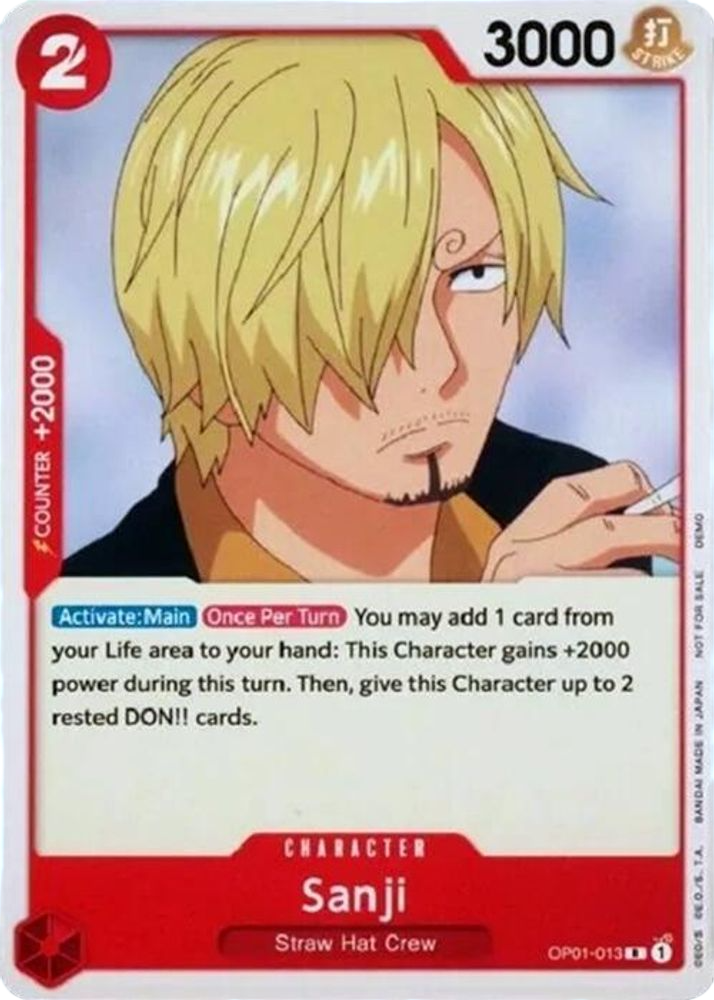
Character cards represent allies, characters and fighters from One Piece. These are played onto the field by paying their required cost using DON!! Cards. Characters can attack the opponent’s Leader, challenge opposing characters, and use special abilities. Their power, cost and effects vary depending on the character. This makes them essential for building a strong and balanced deck.
All Character Cards have the following indicators:
- Card Name, below the illustration. Displays the name of the character represented.
- Card Number on the right down corner of the card, that identifies its set or expansion.
- Card Category on the left down corner, that identifies the card as a character.
- Cost indicates the number of DON!! required to play the character card.
- Counter indicates the amount of power added when the character card is used as a counter.
- Type, that indicates the character type or types, which can interact with other cards’ effects.
- Attribute, next to the power indicator. Indicates the Leader’s combat attribute, such as strike, slash, special, ranged or Wisdom.
- Power, on the top right part of the card. Represents the character’s attack power during battles.
- Effect, describes the characters’ special abilities, which can provide strategic advantages during the game.
- Colour, which must be compatible with the leader’s color restrictions.
- Rarity, that indicates the card’s rarity within the set.
- Block Symbol, that identified the card’s block designation, which can be relevant to tournament legality.
Event Cards
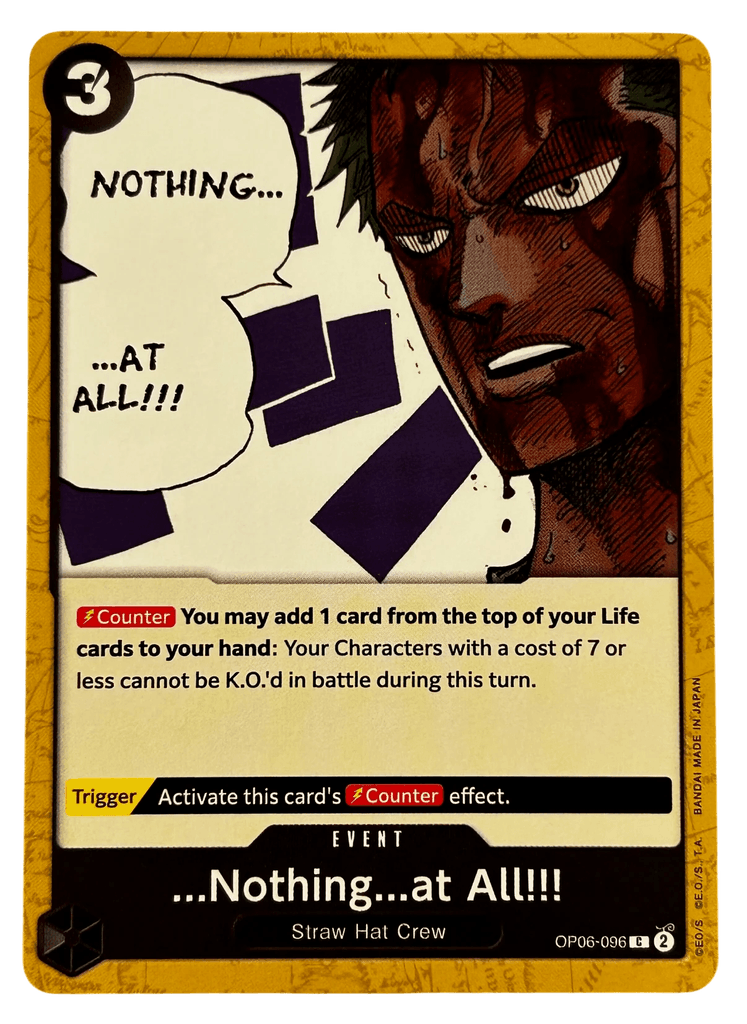
Event cards are special actions, techniques, and abilities that can influence the course of the game. After paying their cost, you can activate them and the effect described on the card. These effects include increasing power, disrupting an opponent’s strategy, or defensive support. Some event cards can be used during your turn, while others have a counter effect that can be activated during the opponent’s turn.
Every Event Card has the following indicators:
- Card Name, below the illustration. Displays the name of the event represented.
- Card Number on the right down corner of the card, that identifies its set or expansion.
- Card Category on the left down corner, that identifies the card as an event.
- Rarity, that indicates the card’s rarity within the set.
- Block Symbol, that identified the card’s block designation, which can be relevant to tournament legality.
- Type, that indicates the event type or types, where applicable.
- Cost indicates the number of DON!! required to play the event card.
- Effect, describes the effect that can occur when the event card is activated. According to its text and timing requirements.
Stage Cards
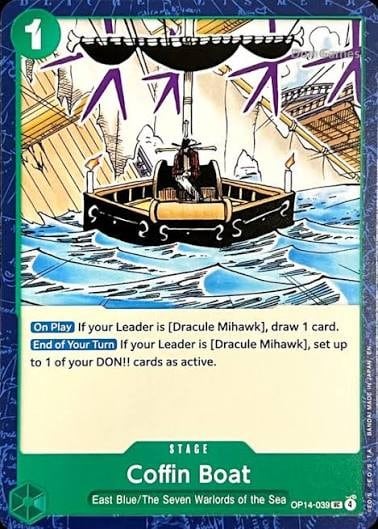
Stage cards represent locations from the One Piece universe, such as islands, ships, and bases. Once Played, they remain on the field and provide ongoing effects or strategic advantages, depending on the card’s text. Stage cards can help generate resources, strengthen characters, or support particular deck strategies.
All Stage Cards have the following indicators:
- Colour which must be compatible with your leader’s colour restrictions.
- Card Category on the left down corner, that identifies the card as a stage.
- Card Number on the right down corner of the card, that identifies its set or expansion.
- Rarity, that indicates the card’s rarity within the set.
- Block Symbol, that identified the card’s block designation, which can be relevant to tournament legality.
- Card Name, below the illustration. Displays the name of the stage represented.
- Type, that indicates the stage type or types, where applicable.
How to build your own Deck in One Piece Card Game
All Deck Archetypes
Aggro Decks (RED)
Aggro decks focus on winning as quickly as possible by applying constant pressure to the opponent’s Life. These decks typically consist of low-cost Characters, Rush effects that allow characters to attack immediately, and power boosts to create efficient attacks. The goal of Aggro (red) decks is to force the opponent to spend cards defending themselves before they can establish their own strategy.
Board Control (GREEN)
Green decks focus on controlling the battlefield by manipulating which characters are active or rested. Its cards can rest opposing characters, restrict their ability to attack or defend, and exploit those openings or remove threats through combat. Green decks often build a strong board of characters and use their effects to maintain a positional advantage over the opponent.
Value/Draw Decks (BLUE)
Blue decks emphasize card advantage, resource efficiency, and manipulating cards in the opponent’s hand or deck. Blue Decks commonly draw cards, return opposing characters to their owner’s hand, place threats at the bottom of the deck, or rearrange deck order to improve future draws.
Acceleration Decks (PURPLE)
Purple acceleration decks specialise in manipulating DON!!, the game’s primary resource, to accelerate its development and play expensive Characters earlier than usual. Purple strategies aim to reach powerful late-game plays ahead of schedule. This creates a resource advantage that can overwhelm opponents before they are ready. Purple may also manipulate DON!! by returning it to the DON!! deck or spending it for additional effects, depending on the leader and card package.
Control/Removal Decks (BLACK)
Black focuses on controlling the opponent’s board by reducing costs and revoking threats efficiently. Ist cards can weaken opposing characters, KO them, or combine cost reduction with removal effects to eliminate otherwise difficult targets. Control decks generally aim to survive the early game, trade resources efficiently, and prevent the opponent from maintaining a threatening board.
Life Manipulation Decks (YELLOW)
Yellow decks revolve around manipulating Life, using it as both a defensivee resource and a source of strategic advantage. Yellow cards may add cards to Life, remove cards from Life, move characters into or out of the Life area. This creates opportunities to recover from pressure, generate unexpected plays, and disrupt the opponent through Life-based removal or other effects.
Build your One Piece Game Card Deck Step by Step
Choose A Deck Leader
The Leader is the foundation of the deck because its colour identity determines which cards you can include, while its effect often defines your overall strategy. Decide which strategy and archetype you want to poetry in your deck. Choose a leader whose playstyle matches your preferred strategy and the cards available to you.
Design Your Cost Curve
The cost curve is the distribution of card costs throughout your 50-card deck. A balanced curve helps you make useful plays at different stages of the game instead of drawing too many expensive cards that you cannot play early. It is a good idea to include low-cost cards for your opening turns, mid-cost cards to develop your board and maintain presence, and higher-cost cards that introduce powerful late-game effects.
You must consider how quickly your deck gains DON!! and how much resource your Leader’s ability requires.
Choose Your Character, Stage And Event Cards
Select the cards that directly support your leader’s ability and your deck’s win condition. Characters usually provide your board presence, attacks, blockers, search effects, or other abilities. Events offer one-time effects such as removal, power boosts, or defensive counters. Stages provide persistent or repeatable effects.
Choose Your Counters
It is recommendable to include enough resources to survive opposing attacks while preserving the cards you need to win. Characters with counter effect values of +1000 or +2000 can be discarded from your hand during the counter step to increase the defending Leader’s or character’s power. Counter events can also provide defensive effects when their requirements are met. Too few counters leave your deck vulnerable, and too many may prevent you from applying enough pressure to win.
More than a Card Game: Strategy and Community
The One Piece Card Game is much more than collecting cards and building a deck. Understanding card types, archetypes, and learning how to construct a balanced deck develops strategic thinking, adaptability, decision-making, and problem-solving skills. Every match presents a new challenge, encouraging players to evaluate their options, anticipate their opponent’s moves and adjust their strategies.
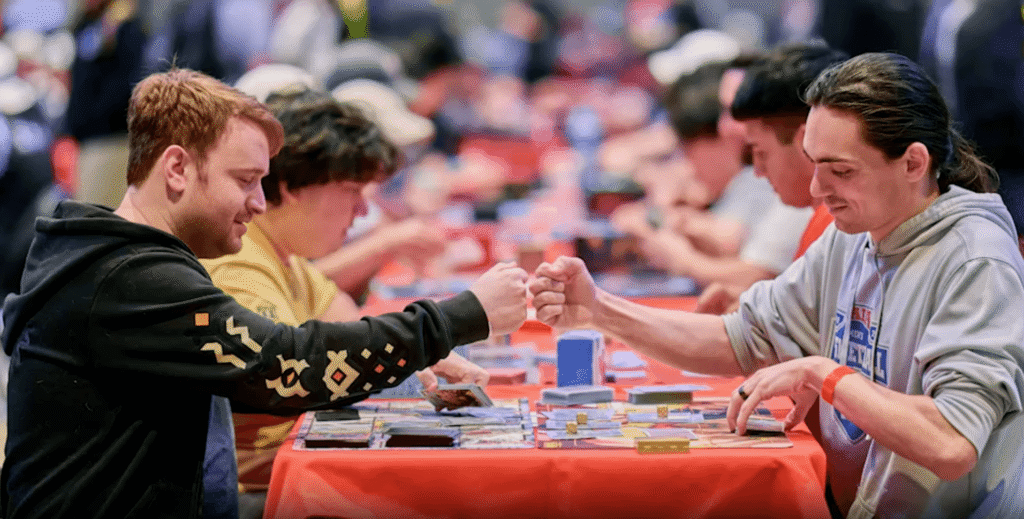
Beyond the gameplay itself, the game offers a social experience that brings people together through casual gathering, local games and organised tournaments. These events create opportunities to meet new people, build friendships, exchange strategies, and become part of a community. Playing against different opponents also exposes players to new deck ideas and approaches, encouraging them to learn from their experience and continuously improve.
If you like One Piece Card Game and are looking for fun game gatherings, friendly matches, and exciting tournaments, join Gamers.Online!
Meet fellow players during our gamer gatherings and become part of our growing community.

Join the crew, find your next match, and let the adventure begin!
Game on!
- One Piece Card Game: Card Types And Building A Deck
- EA Closes BioWare and Revives Fight Night after 15 Years

- ARC Raiders PvE Beta Test, Is it the end of PvP?
- Warhammer: Age of Sigmar – Spearhead, Preparing for Battle
- Squadron 42 Now Has A Steam Page And A New Trailer
- Invokyr A Video Game about a Forgotten Board Game