European Battery regulations will come into effect next February 2027, because of this Nintendo has communicated that selected products, includiong nintendo Switch 1, will begin to be replaced. Starting this summer (2026), selected products will begin to be replaced on a rolling basis by revisions that contain a user-replaceable battery.
While Nintendo Switch 2 will get a new version including a replaceable battery. Its predecessor, the original Switch will be discontinued in the European market.
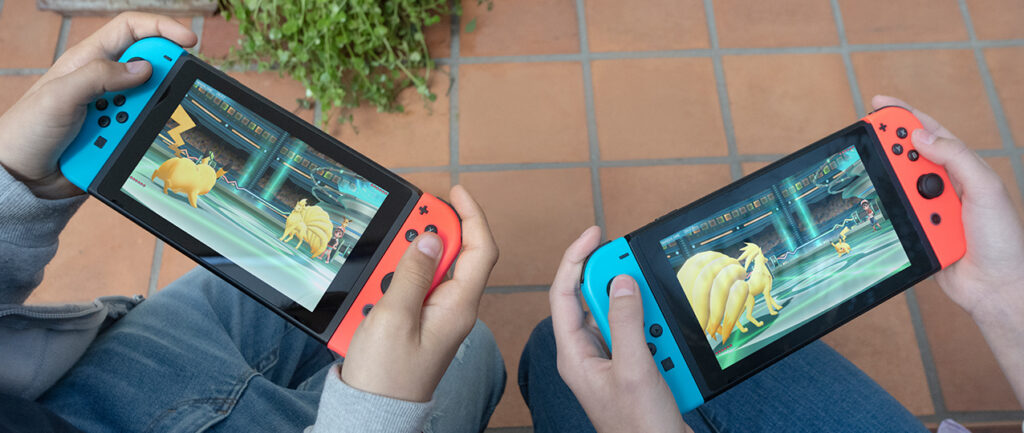
Nintendo Switch 1 Discontinued in the European Market
Nintendo has announced that the Nintendo Switch, Nintendo Switch Lite and Nintendo Switch–OLED will continue to be manufactured in 2026 and will be widely available in Europe all year. However, for mid-February 20274 onward Nintendo will no longer sell the above mentioned products to retailers. At the same time, starting this summer 2026, and in preparation for upcoming changes in the European battery regulations coming into effect, selected products in Europe will begin to be replaced on a rolling basis.
In case you were wondering, Nintendo has also stated that it will not be possible to choose which version you want to buy. When the current version of a particular product is sold out, it will be replaced by the revised version.
According to Nintendo, the revised products incorporating user-replaceable batteries will function exactly the same as the previous existing versions.
Products that will be revised to comply with the EU Battery Regulation
These are the products that will be revised and expected to become available from summer 2026 to early 2027. Due to various factors some of them may not become available in all European countries at the same time:
- Joy-Con pair (selected colours) Joy-Con (L) Neon Blue Joy-Con (L) Neon Blue
- Nintendo Switch 2 console
- Joy-Con 2 pair Joy-Con 2 (L) Joy-Con 2 (R)
- Nintendo Switch 2 Pro Controller
- Nintendo 64 (N64) Controller for Nintendo Switch
- Nintendo GameCube (GCN) Controller for Nintendo Switch 2
Products Discontinued from the Nintendo Store Due to EU Regulations
As communicated by Nintendo, the following products will not be replaced by versions that contain user-replaceable batteries:
- Nintendo Entertainment System (NES) Controller for Nintendo Switch
- Pokémon Go Plus+
- Nintendo Switch
- Nintendo Switch Lite
- Nintendo Switch – OLED Model
- Nintendo Switch Pro Controller
- SEGA Mega Drive Control Pad for Nintendo Switch
- Super Nintendo Entertainment System (SNES) Controller for Nintendo Switch
A Closer look at the EU Batteries Regulation
The withdrawal of the Nintendo Switch 1 from the European market has made headlines, outraged gamers, and spread like wildfire across social media. Here is an analysis of the European Regulation on the handling and labelling of batteries. All the points that directly affect Nintendo.
(2) Batteries are thus an important source of energy and one of the key enablers for sustainable development, green mobility, clean energy and climate neutrality.[…] In view of the strategic importance of batteries, to provide legal certainty to all operators involved and to avoid discrimination, barriers to trade and distortions on the market for batteries, it is necessary to set out rules on the sustainability, performance, safety, collection, recycling and second life of batteries as well as on information about batteries for end-users and economic operators. It is necessary to create a harmonised regulatory framework for dealing with the entire life cycle of batteries that are placed on the market in the Union.
This means that compliance with the regulation extends beyond redesigning a console to make its battery easier to replace. The company must also ensure that batteries meet new sustainability and safety standards. In practice, this recollection encourages manufacturers to design consoles and accessories with longer lifespans, easier repairs, and improved recyclability.
(11) This Regulation should apply to all categories of batteries placed on the market or put into service within the Union, regardless of whether they were produced in the Union or imported. It should apply regardless of whether a battery is incorporated into appliances, light means of transport or other vehicles or otherwise added to products or whether a battery is placed on the market or put into service within the Union on its own. […] Placing on the market is considered to take place when the battery has been made available for the first time on the Union market, by being supplied by the manufacturer or importer for distribution, consumption or use in the course of a commercial activity, whether in return for payment or free of charge. Thus, batteries placed in stock in the Union by distributors, including retailers, wholesalers and sales divisions of manufacturers, before the date of application of relevant requirements of this Regulation do not need to meet those requirements.
Existing Nintendo Switch family consoles were not designed with this requirement in mind. Nintendo is revising newer hardware, such as the Switch 2 model, while the original Switch will be discontinued from the European market before the rule becomes fully applicable.
(13) Products placed on the market as battery packs, which are batteries or groups of cells that are connected or encapsulated within an outer casing to form a complete unit ready for use by end-users or in applications that the end-user is not intended to split up or open and which conform to the definition of batteries, or battery cells that conform to the definition of batteries, should be subject to requirements applicable to batteries.
This new regulation goes beyond making batteries easy to access and replace. It also changes the way companies like Nintendo must present the information about the batteries inside their devices. Nintendo will need to include clearer battery labels, showing details such as capacity, and recycling information.
(14) Batteries that can be made ready for use by the end-user with commonly available tools by using a ‘Do It Yourself’ kit, should be considered to be batteries for the purposes of this Regulation. The economic operator placing such kits on the market should be subject to this Regulation.
This regulation also aims to make it easier for consumers to find official information when they need it. Nintendo will have to provide battery specifications, replacement instructions and safety guidance. This should make the battery replacements and repairs more straightforward, whether you’re doing it yourself or taking your console to a repair shop.
(16) After being placed on the market or put into service within the Union for the first time, a battery can be subject to re-use, repurposing, remanufacturing, preparation for re-use or preparation for repurposing. For the purposes of this Regulation, in accordance with the Union framework on product regulation, a used battery, meaning a battery that has been subject to re-use, is considered to have already been placed on the market when it was first made available on the market for use or distribution.[…]In addition, in accordance with the Union framework on product regulation, a used battery that has been imported from a third country is considered to be placed on the market when it enters the Union for the first time. Therefore, a battery that has been subject to re-use, repurposing, remanufacturing, preparation for re-use or preparation for repurposing and that has been imported from a third country should comply with this Regulation.
The European Regulation2023/1542 places greater responsibility on manufacturers after they sell their products. Which means that Nintendo, like every other electronics company operating in the EU, must help fund the collection and recycling of used batteries, and report how many batteries it places in the European market. The goal is to reduce electronic waste and ensure that companies properly recycle more batteries.
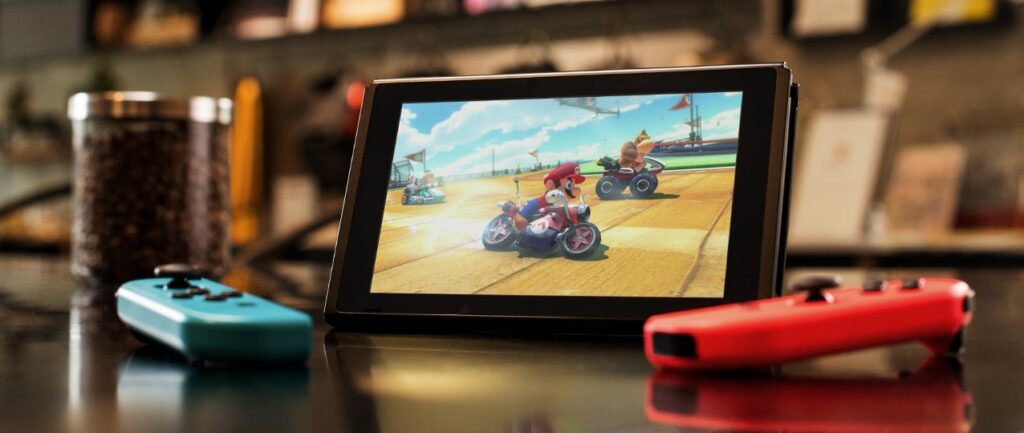
Possible Market Consequences Regarding the Discontinuation of Nintendo Switch 1
Having analysed the regulations that Nintendo will have to comply with, and the company’s decision to discontinue the Nintendo Switch 1, we will now outline the potential consequences of these measures.
While a stronger transition into Nintendo Switch 2 is expected, there is no confirmation this will happen as fast as it could be theorised.
One likely consequence will be a shift in prices on the second-hand market. When a product gets discontinued or goes out of stock, repairing or replacing it becomes more difficult. Retailers would eventually sell through their remaining Nintendo Switch 1 inventory, leaving Nintendo switch 2 as the only generation option in Europe. Replacement parts and battery repair services may become more scarce. Demand for spare parts shifts towards the second-hand market. And, over time, that discontinued product becomes a collector’s item.
Fortunately, the same Nintendo Account works on both consoles. Meaning that whether you change to Nintendo Switch 2 or stay with the original console, you’ll have access to your digital games.
On the other hand, physical games are subject to different conditions. Due to the discontinuation of the Switch 1, physical games released in Europe will be for the Switch 2. Unlike the second generation, games released for this newer generation are not compatible with the original generation.
We’d love to hear your thoughts on these new measures Nintendo is introducing. Are you a Nintendo Switch 1 player? Join us and discover a community of gamers with whom you can share games and experiences, and where you might just find your new gaming group. Gamers. Online: a community created by gamers, for gamers.
Game on!🎮