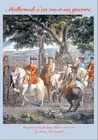
Malbrook s'en va-t-en Guerre: Wargaming Rules for Large Battles 1700-1715

Where To Play
Find gamers to play Malbrook s'en va-t-en Guerre: Wargaming Rules for Large Battles 1700-1715 and make friends!


Matches

No matches
Boardgames Events
Con on the Cob 2026
Alaska RPG Con 2026
FriendCon Fall 2026
ArneCon 4
Game Details


Go World Ranking
Game Info
Malbrook s'en va-t-en Guerre are wargames rules designed to re-fight big battles of the War of Spanish Succession with 15mm or smaller scale miniatures. They are derived from my original Close Fire & European Order rules which cover the same time period but were designed for smaller engagements with a larger ground scale. This big-battle variant of Close Fire & European Order allows players to fight out a full scale battle of the War of Spanish Succession with a realistic ground scale and without getting bogged down in the minutiae of small brigade actions. As it is the case with Close Fire & European Order, many of the rule mechanisms have been developed from Andy Callan’s American War of Independence rules- Loose Files and American Scramble, which were originally published in Wargames Illustrated no. 1. In Malbrook, the basic game unit represents a brigade of 3-12 battalions of foot or 6-36 squadrons of horse. These brigades will need to be deployed into commands of several lines, as they were historically, in order to give support if the first line gets into trouble. The simple yet subtle command and control rules encourage players to keep their brigades together in historically realistic formations. Brigades in range of their leader will usually act as the player wishes, however, if a command becomes broken up then the player will loose control and brigades may start doing things other than what he might wish. In this period, effective musketry took place at 50-100 yards, In order to re-fight big battles, this distance is reduced to 1-2 inches on the games table. Therefore, musketry is incorporated into close combat. At the heart of the rule mechanisms is the concept of Disorder Points (DPs). These were invented by Andy Callan for his American War of Independence rules and have proven to be an enduring and elegant way of reflecting the variable state of morale and combat effectiveness. A brigade will incur DPs for manoeuvre, receiving artillery fire, close combat and morale, and they will lose them by halting to redress ranks or through the intervention of a leader. The system is easy to use, does not require any paper work and dispenses with the need for lots of morale checks. Designed with 15mm in mind, rules can be adapted for other scales. —description from the rules introduction
Random Games
Arachnid Den
Oakwood Garrison
Seaside Shrine
Church of the Subterrane
Forest Clearing
Winter Road
Village of Elmhaven

Exodus Chronicles
Grey Tower