
Luck is a mechanic often used in board games. Whether the whole game it’s completely based in chaos and uncertainty, or if it’s part of a bigger action or mechanic to the game. It is also a mechanic that divides opinions depending on the play weight it represents during the playthrough.
Uncertainty and luck-based board games are often less attractive to strategic long-play gamers. Games where luck decides the next step and the winner are just determined by a fortunate dice roll or drawing cards. On the other hand, pure skill- and strategy-based board games with no room for luck are often scarce in complex board games, asymmetric, and legacy games. The majority of board games incorporate the luck component as a part of a larger mechanic, like buying special cards, revealing new obstacles or enemies from a card deck, or hidden objectives.
The role of Luck in Board Games: Involvement and Levels
Luck as a mechanic in board games serves the purpose of chaos and surprise. When players have to adapt to new situations, new objectives or enemies, they may have to change their strategies. This luck component makes every playthrough different and sparks replayability. Players will want to experience new possibilities and actions in the same game.
In cooperative board games, luck functions as a shared surprise element. Whether it creates a setback or an advantage, the group as a whole can use their abilities and actions to manage, affect, or resolve the effects of the event. An example of this would be the mythos phase in Arkham Horror, in which enemies enter the game by being drawn from the encounter deck.
In competitive board games, luck mechanics affect the individual player, drawing cards or dice rolls can affect the playthrough and shift the players power balance. Some luck mechanics in competitive board games stay secret for the rest of the players until the end of the game, until the player wants to use them, or the end of a turn. Like special cards in catan or secret objectives in Twilight Imperium.
In terms of how luck mechanics can affect the players decisions and strategies, there is a clear distinction on when the player is influenced by the surprise and uncertainty.
Luck before player decision
Card/Tile Draw
Like in Carcassonne, when players draw a tile, they do it from a face-down tile deck. This means the players do not know the aspect of the tile they are drawing or its potential use before drawing. The luck mechanic appears before the player’s decision and strategy, thus the player needs to adapt to the surprise.
Rolling Dice Before Character or Player Actions
In King of Tokyo, players can roll the dice up to three times, re-rolling the results that the player does not agree to. After rolling the dice, the player must resolve all of the dice. Rerolling introduces an extra risk: the player could get a better result or a worse one. The consequences and actions occur after this luck mechanic.
Luck after player decision
Role Checks and Combat Rolls
A clear example of this will be attack rolls in Descent: Journeys in the Dark. When a player (hero) performs an attack action, they first decide the weapon and target for the action. Then they roll the dice for the attack action, while the defending player rolls all necessary defense dice. This attack action is a player decision made before the dice rolling. The luck mechanic determines if the attack is successful or not.
Hidden information
Unknown Player Roles
Like in Bang!, where player roles are secret between players, only the role of the Sheriff is shown to other players. Player roles only get revealed when the players lose all their live points (bullets) and die. Then they reveal their role and step out of the game.
Levels of Luck Mechanics In Board Games
Pure Luck-Based mechanics
Pure luck-based board games are those in which all player actions and outcomes depend on mechanics that cannot be directly influenced by long-term strategy. Progress in game is determined by random elements such as drawing cards that can benefit or hinder a player, or rolling dice to reach the goal.
As a consequence, players must adapt constantly to the result of the dice or the new cards drawn, with strategy and planning limited to the short term. The winner of these games is therefore determined less by skill and more by the random results of these mechanics.
These games typically feature simple mechanics, making them easy to learn, quick to play, and accessible to a wide range of players.
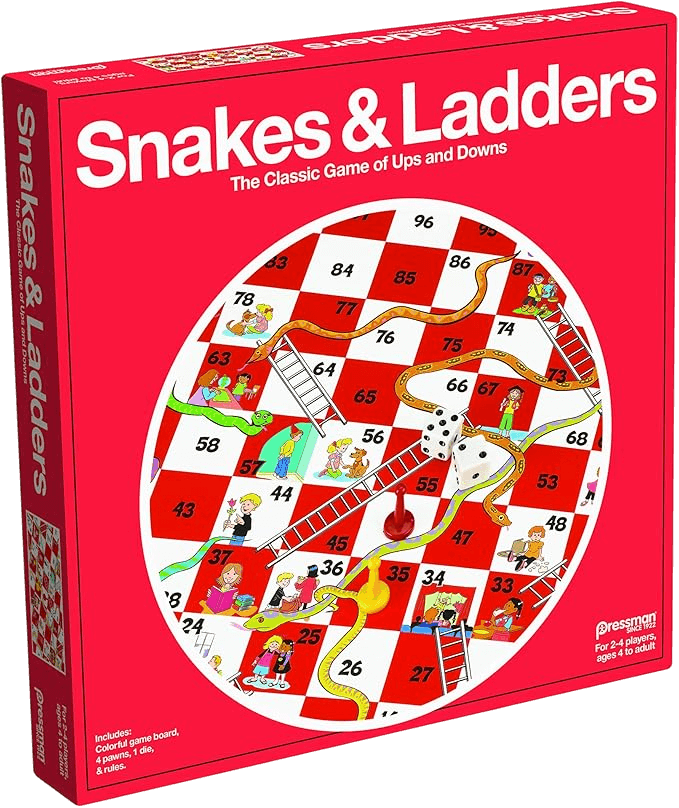
Snakes and Ladders
👤Players: 2-4
🕑Duration: 20-30 min
⚔️Competitive
Snakes and Ladders is a clear example of a pure luck-based board game. Player movement is determined entirely by rolling a die, and players have no control over the outcome of their turn. Landing on a ladder can rapidly advance a player’s position, while landing on a snake can significantly set them back.
Luck-Heavy Mechanics
Luck-heavy mechanics in board games are those in which outcomes depend on a random element, such as rolling dice or drawing tiles or cards. However, unlike pure luck-based games, luck-heavy board games still allow meaningful player decision-making and strategy. Whether it is resource farming or movement capacity, the final outcome of a turn depends on the player’s choices. Based on the luck component, the player may be able to take a larger or more meaningful action, or a much more limited path with restricted options.
In these games, luck shapes the range of possibilities, but player decisions determine how those possibilities are used.
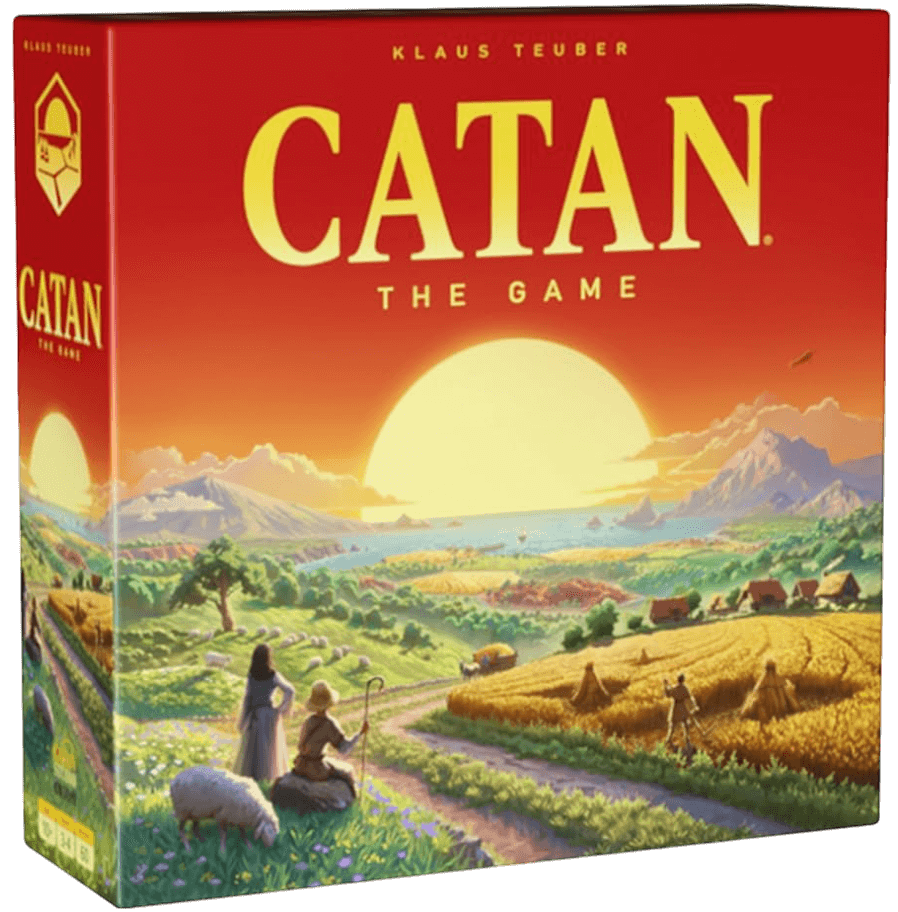
CATAN
👤Players: 3-4
🕑Duration: 120 min
⚔️Competitive
Catan is an example of a luck-heavy board game because the dice are rolled to determine which resource hexes produce which materials. Players cannot control which number is rolled, so resource income is uncertain. However, player decision making matters, as they choose where to place their initial settlements. Players may also choose what to build, when to trade and whom to trade with throughout the game.
Luck-Balanced Mechanics
Luck-balanced board games use randomness, but its impact can be controlled, mitigated or strategically managed by players. Randomness introduces uncertainty to the game; however, these are not decisive outcomes. Strategic planning and decision-making remains effective over the entire game. In these games, players are rarely stuck in a single outcome; instead, they are given the tools to adjust, hedge or recover from unlucky results.
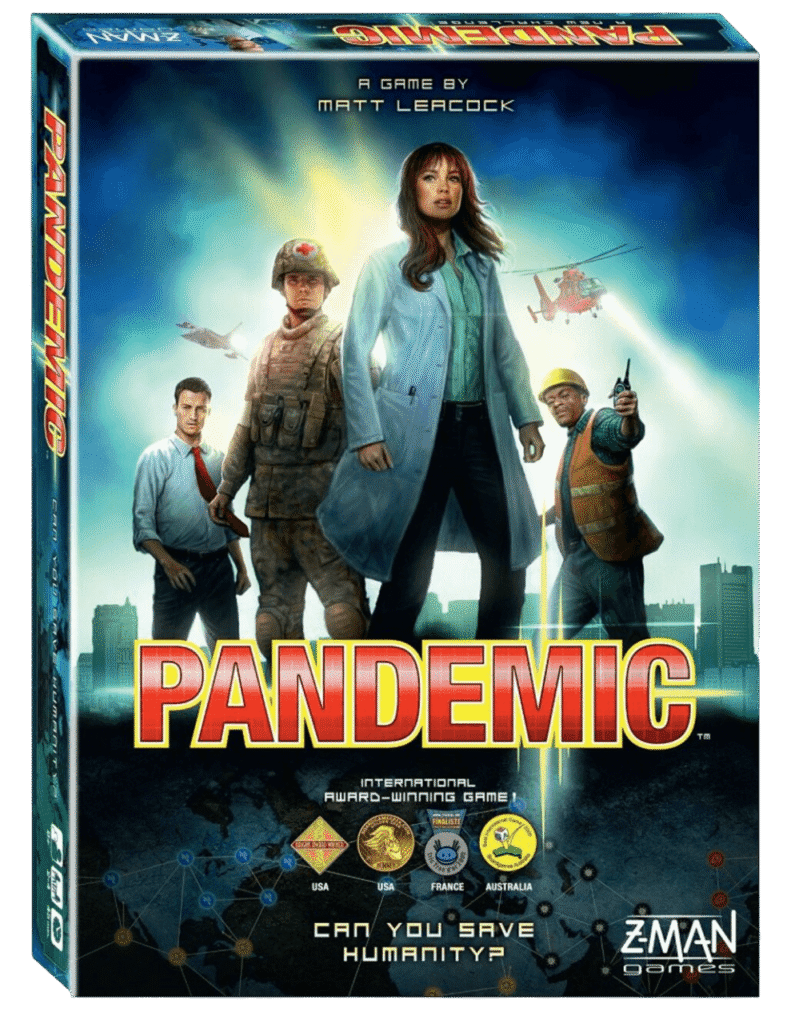
Pandemic Legacy
👤Players: 2-4
🕑Duration: 60 min
🤝Cooperative
Pandemic is a good example of luck-balanced mechanics as players draw infection cards randomly, determining where outbreaks occur each turn. However, planned routes and strategic actions, such as choosing which player goes where, who treats which disease, when to build research stations can minimise the unlucky effects.
No-Luck Mechanics
No-luck board games are games where player decisions, strategy and skill determine outcomes and random elements do not really exist during the playthrough. Some may fall into the categories of brain burning board games, or deduction and logic games. These games are, in general, easy to learn and understand, hard to master.
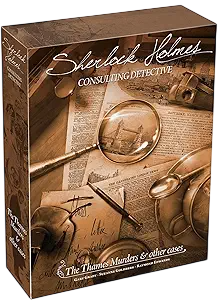
Sherlock Holmes Consulting Detective
👤Players: 1-8
🕑Duration: 120 min
🤝Cooperative
Sherlock Holmes consulting Detective has no random or luck elements, as it is a pure deduction game. There are no dice rolls, no decks or card draws. Success is determined by which locations players visit, which clues they pursue and how they interpret the evidence.
Balancing Luck, Strategy and Player Experience
Luck Mechanics in board games are elements that often divide player opinions and preferences. Some players enjoy the unpredictability and tension that randomness brings, while others prefer skill, planning and strategic board games. Luck can appear in many forms, influencing not only the pace and excitement of a game, but also how players interact, adapt and make decisions.
Whether you like the uncertainty and chaos of luck mechanics, or you prefer pure logical and deduction games there is a community built up by gamers and for gamers waiting for you. Find new players who share your passion for tabletop experiences and discover new games.
Game on!🎲🃏