
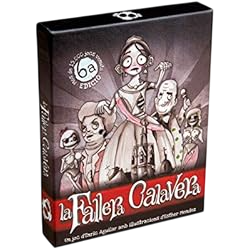
Curses, battles, betrayals — and above all, the quest to complete the paella. La Fallera calavera is a thrilling and competitive card game that brings Valencian culture to life.
Zombies and Paellas: The Adventure of La Fallera Calavera
La Fallera calavera or Zombie Paella — its title in the English translation —, was born out of love for Valencian Culture in 2014 thanks to a crowdfunding campaign. The creators wanted to combine the local traditions, legends and stories with a humorous and fantastical twist in a fun and competitive card game.
Each card is designed with cultural references and characters, regional humour and a touch of mischief, ensuring every match is unpredictable and competitive. Allowing players to immerse themselves in the unique world of La Fallera Calavera. From local players to international game fairs, its mix of humour and tradition captured the player’s attention.
Almost more than eleven years after its first publication, La Fallera Calavera has sold more than 100,000 units by 2020. The card game is a strong success in Spain, especially within the Valencia cultural sphere.
❗While the classic game began only in Valencian, the Deluxe edition expands language support to Spanish and English.
The game mechanics of cooking a Paella
👥Players: 2- 5
🕑Duration: 30 min
⚔️Competitive
La Fallera Calavera , or Zombie Paella, consists of a deck of 103 cards. To win, a player must gather 5 ingredient cards in order to cook a traditional Valencian Paella. While players compete to complete their paella, they can cast curses, trigger battles or betray other players using action cards to hinder their opponents’ progress.
Draw cards, cast curses, challenge players to duels
Treasure cards (Yellow Cards)
Easily identified by the yellow skull in the upper left corner of the card. These treasure cards are objects that players possess and have permanent and cumulative effects. Treasure cards must always be visible to the players, placed face up in a row on the table in the player’s possession.
There are three types of yellow cards:
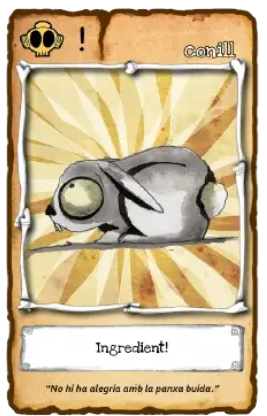
- Ingredients: these cards also have an exclamation mark (!). When a player has 5 of these cards in their possession, the game ends and this player wins.
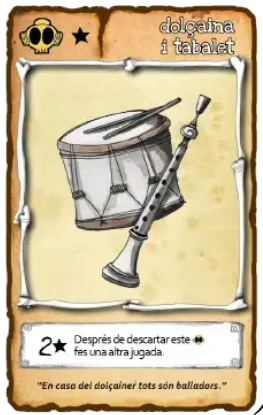
- Treasures for sale: Marked also with a star, these cards can be sold or discarded and draw from the deck the number of cards indicated by the number next to the star.
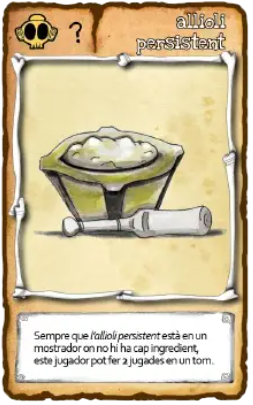
- Other treasures: Also marked with (?). These cards have special effects that are very different. The text on the cards indicates its use.
Battle Cards (Blue cards)
These cards, unlike the treasure cards, are hidden and shouldn’t be shown to other players. Players must hold these cards in their hands. These cards have a red skull in the upper left corner and their basic function is attack or defense during a battle.
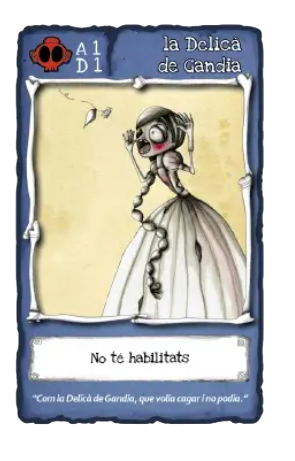
There is no limit to the number of cards that a player may have in their hand.
Combat between players takes place when a player that has a battle card decides to declare a battle against another player for a specific treasure.
- The player who declares battle must indicate which treasure they are attempting to steal.
- This same player places the attack card face down on the table.
- The player in possession of the treasure must decide whether to defend it or not.
- If it is not defended, the attacking player takes the treasure and discards their attacking card.
- If it is defended, the other player may choose a battle card to defend themselves and place it face down on the table.
When the players reveal their cards, the point values are compared. If the attacker’s card has a higher attack (A) than the other player’s defense (D), they steal the treasure. If the defence is equal to or greater than the attack, the treasure remains in the possession of the defender.
Special cards (Purple cards)
These cards have a white skull in the upper left corner. These can directly affect other players’ treasure cards, intervene in battles as well as block or counter other special cards.
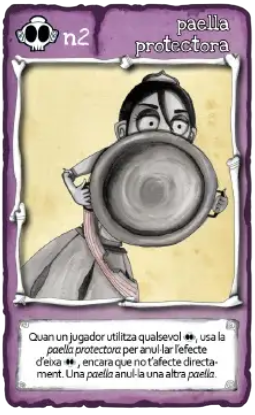
Next to the white skull, these cards have an “n” followed by a number. This number indicates the level of the special card, a number used in case of confusion or contradiction between the effects of these special cards. The higher rank for these cards would be the n8, while the lowest would be the n1.
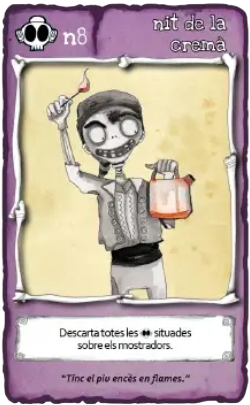
La fallera calavera card game bases all its characters and illustrations in Valencian culture and folklore. Appealing to the interest of both board game players and non-players.
La Fallera Calavera 2: The ingredients of Discord
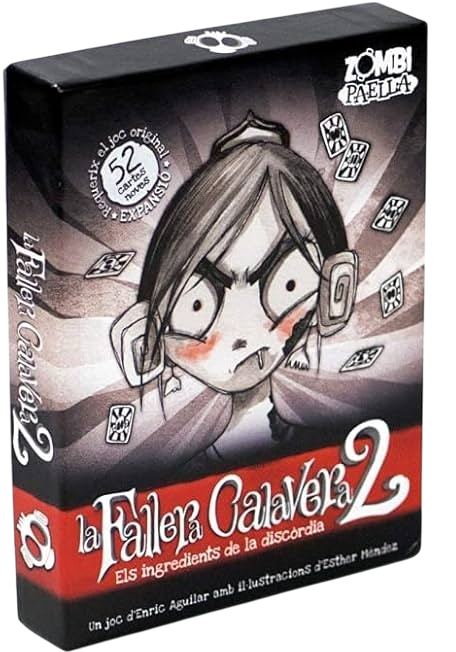
In 2015 the adventure continued with The ingredients of discord, an expansion that adds 52 new cards to the classic deck, increasing the variety and unpredictability of the card mix. Due to the success of the classic game, this expansion also adds the rise of the máximum number of players up to 6.
New mechanics
- The humour coin: a physical token that shows the fallera calavera in a good mood on one side, and in a bad mood on the other. Players flip the coin whenever certain new cards or ingredients are played.
- The shrimp of Dénia: playing this card can have unpredictable consequences. When a player uses this card, the humour coin must be flipped.
- The spy mussel: lets the players spy on or interfere with other player’s hands or actions.
- The forbidden ingredient, chorizo: this card acts as a curse. If the chorizo is on the player’s hand or paella, the player can not win until they get rid of it.
La Fallera Calavera 3: Beyond the Paella
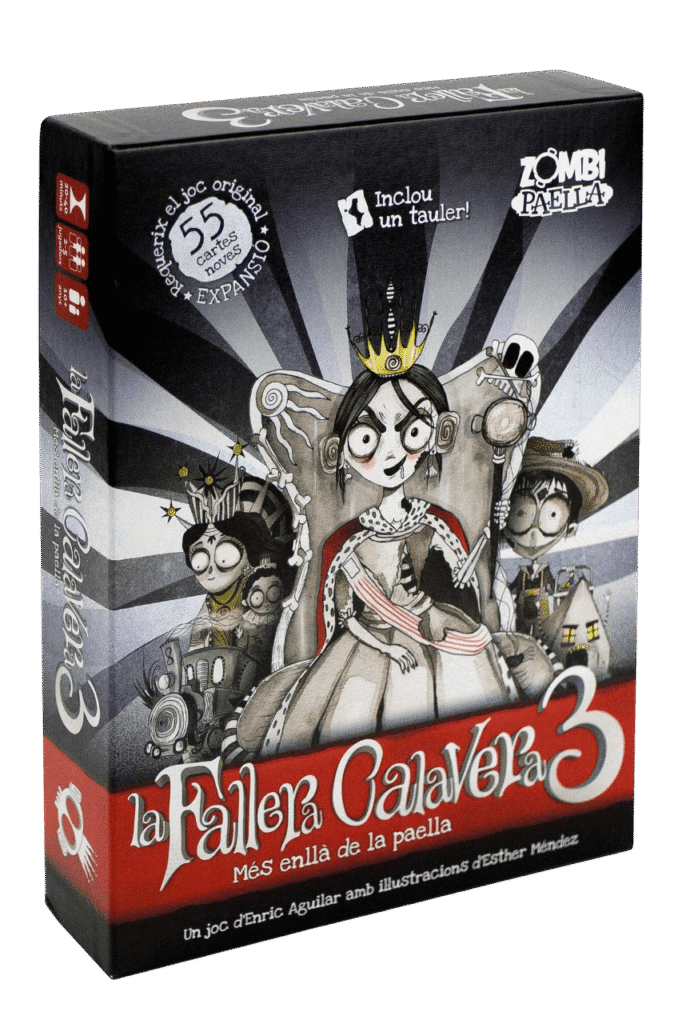
With the success of the game growing, in 2019, the studio Zombi Paella released a second expansion to the game: Beyond the Paella.
An expansion that included 55 new cards and for the first time introduces the map element with a board with two sides. A pawn representing the queen calavera and a larger box for storage.
New mechanics
- The kingdom of the Queen calavera: the board and map showing 5 regions over which the queen Calavera pawn moves. Depending on which region she occupies, special card effects change.
- Regional meal cards: each region on the map introduces new unique traditional dish cards that reward the players for collecting region-specific ingredients.
- Customizable playstyles: from light and funny to complex and competitive. La Fallera calavera 3 takes the game interactive and tactical mechanics to another level.
Celebrating culture one card at a time
Board games that celebrate culture do more than entertain. These games bring people together across all ages and backgrounds, and that is what board games are for. By adding local traditions and stories to the play, these games become valuable educational tools.
Whether played with family, friends or new players interested in this type of games, players are in for a rich and interactive experience.
Do you know other games based on culture? Let us know!