
In Dungeons and Dragons, creating a character is a complex, imaginative, and ongoing part of the game. Your character’s story does not begin and end with the campaign. It continues to evolve and to complete their story, as the events unfold. They grow and change, forging new relationships, uncovering secrets, adding new chapters to their personal lore, and responding to challenges shaped by their past.
There are some resources during character creation that can make your character backstory believable. For example, in Dungeons and Dragons, it is recommended to add at least three NPC characters to your story with significant influence to the story. This permits the DM to use them as a reference, or even appear during the campaign. However, the following questions are designed to take your character’s morals, emotions, and reactions to the next level. Key deatails that will transform your next Dungeons and Dragons session.
As a Dungeon Master, these questions are also a great resource of information to know how some situations, references and trials may affect your players around the table. The answers to these questions will allow you to craft encounters that feel personal rather than random. You’ll create narrative moments that resonate more deeply, challenging, and meaningful to your players. As a consequence, you’ll strengthen their investment and involvement in the story. You will reinforce their interest in continuing the story and gain replayability during your Dungeons and Dragons campaign.
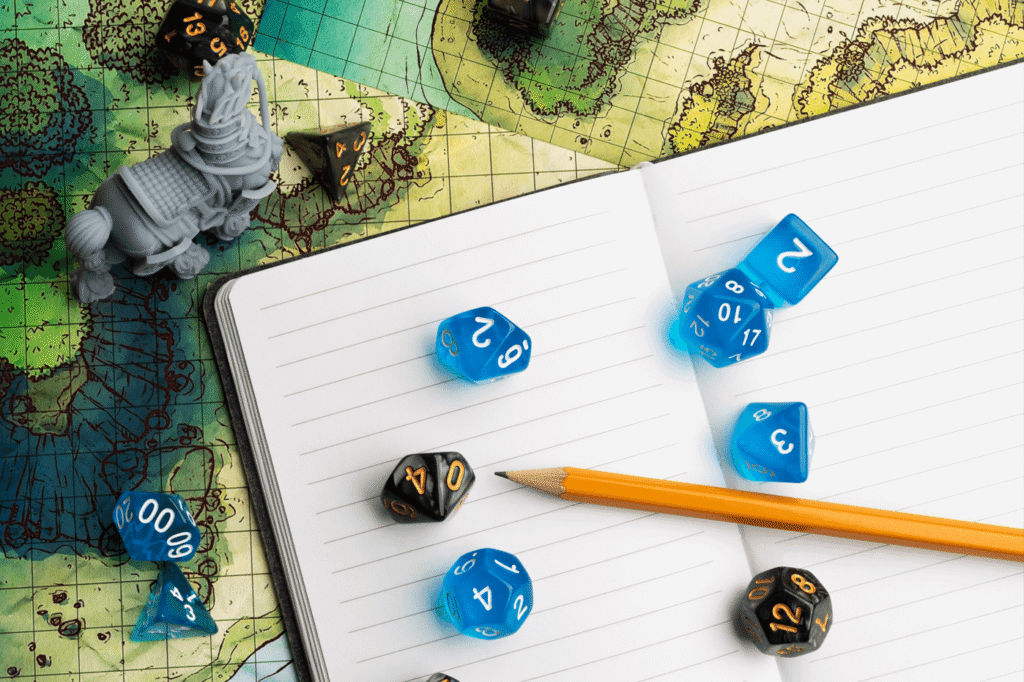
20 Questions to define your Character in Dungeons and Dragons
Feel free to use these questions whether you are a player to deepen your character and make their story more believable, or a dungeon master seeking richer details to weave into the campaign.
These questions about Character creation in Dungeons and Dragons can help you expand backstories, create meaningful plot hooks, and design situations that naturally evoke strong emotional responses from your players.

What were they doing before adventuring?
Very simple, yet meaningful to their origins and way of life. The character could be at the end of a previous adventure or crying their day to day before the first session of the campaign starts.
This information is also crucial for the Dungeon Master to fit in the events that will kick off the adventure.
If the character was living their daily life in a calm and routine manner, has escaped from a dangerous situation, or has returned from their last adventure, they will have a different reaction at the beginning of the campaign. In other words, the shock of leaving a peaceful life behind could make them fearful or irascible. Escaping from a dangerous situation could keep them tense, and starting a new adventure with the experience of the previous one could keep them calm and focused.

Why did they decide to join this adventure?
Defining why your character has decided, or conversely, feels compelled to embark on the adventure is crucial to the campaign. Not only does it justify their role within the campaign, but it can also give them prominence at certain moments or in certain subplots.
The dungeon master will take this information and incorporate it into the story, shaping future encounters and challenges.

What’s the place your character calls home?
Whether it is a place, or a person. Having a location to call home can give the Dungeon master the opportunity to include it in the campaign, visit it or make it part of the consequences of the narrative. As well as if it is a person, a family or a group of people.
A character’s home can say a lot about the adventurer. Whether their home was destroyed or flourishes in a peaceful atmosphere. Whether it is a safe place or hostile towards its inhabitants.
Describing what the character calls ‘home’ is also an emotional resource that the dungeon master can use in different situations. For example, a smell or a sound that lowers the adventurer’s guard, making them trust what their senses evoke. This can be used both for good, and to deceive or trick the character.

What was a life-changing event in life?
Life changing events are often described as the loss of innocence or hope to a character. An Event that changes the way they see the world. Maybe it sparks something crueler in their personality, or makes them lose hope. Maybe this makes them more hesitant to show their feelings or real motivations. And while it can act as such, like the loss of a family member, a friend, a war, or an accident. It can also be a change to the better.
Sometimes we overlook a character’s fear of losing what they have gained and how it has changed their life for the better.

What’s your character’s biggest flaw?
This question can cover a wide range of answers. Is it a character flaw? For example, if your character has a short temper, gets easily distracted, they trust too much what they are told, or, on the contrary, they don’t trust anyone. For these character markers the player could suggest more insight checks to the Dungeon Master.
If it’s a performance flaw, for example, if your character is clumsy the Dungeon master could ask for dexterity, athletics or acrobatics more often.

What’s your character’s greatest fear?
From rational to irrational fears. Either can be a good answer.
Your character could be afraid of an event that occurred in the past and that can be linked to the campaign’s storyline. This gives it more depth and permits you as a character to act more surprised or afraid during certain events.
Your character can also be afraid of heights, the sea, the dark or any magical creature, which make it funnier during certain events during the campaign. However, take into account that fear may affect your results in checks and performance.

Who do they love the most?
The answer to this question will shape your character’s personality and morals. The person who they love the most could be a relative, a partner, or a pet. They will defend and cherish that person and this will affect their morals. If the person they love the most ends up to be evil, they could end up heart broken, or even defending their point of view.
If the person they love the most died before the events of the campaign, this could make them melancholic.

How would their closest ones define them?
This question calls for introspection on the part of the player. Defining your own character from the creator’s perspective is an exercise we will do in many of these questions. However, the answer to this one requires putting yourself in the shoes of others and how they might define the character from their perspective. Some traits that the character has, such as complicated or defensive behaviour, may come across as harsh to others.

What’s their greatest secret?
Your character will try to protect their greatest secret from party-knowledge at all costs. Choose something that may make them feel guilty or ashamed. The Dungeon Master may include some events to unravel this secret and expose your character to the party. Also imagine how your character will react to anyone finding out their secret.

What food do they dislike? What are their eating habits?
This question may seem unimportant, but the reality is that the answer to it can define your character’s backstory. Whether your character had access to food or not. What social class they belonged to, or even their origin and behaviour in the face of resource accumulation.

How does your character like to relax?
During the campaign, there will be times when events may overwhelm the characters, and defining what relaxes them and how they relax can help your character relate to other members of the party.
We must remember that a Dungeons and Dragons campaign is not limited to jumping from one event to another. Characters also need moments to interact and develop relationships with each other.

Who was their first love?
This is another question that can define your character’s predisposition to future relationships. If their first love ended in disappointment, your character may be more wary about getting involved with someone again. If your character is still in love with their first love, they may harbour the fantasy of getting back together with that person, or remain emotionally attached to that relationship.

Who was their immediate family?
Adding your character’s immediate family to their backstory is more than necessary. In fact, unless there has been a family tragedy, it is recommended that one of the three NPCs that the player must add to their character sheet be a family member or someone close to their family. This helps develop their own story throughout the campaign.

What is their motivation? How does it affect the campaign?
Another way to ask this question would be: what was their motivation before entering the campaign? Were they set to be the best at their class? Were they going to recover something or someone of immense value to them? Maybe, on the mission to rescue someone. Your character’s motivations should not end before the campaign begins. It is the task of both the player and the Dungeon Master to add these dreams and motivations to the main story.

Do they fit into society? Were they outcasts?
Here is another question that can shape your character’s personality and reactions. Your character may display a more realistic or raw profile when faced with authority and society. This may evolve as the story progresses, with each situation they experience or characters they meet.

How does their class fit into their narrative?
As a player, you must find the link between your character’s development and their class. How their actions throughout their life have led them to become a paladin, a cleric, or a pyrotechnician. Whether they have been forced to follow a path, or have been able to choose for themselves. Whether it is a class “inherited” through cultural context, such as a druid. Maybe it has been out of necessity, such as a rogue or a thief.

What is your character’s favourite person?
We should clarify that this question does not necessarily refer to the person your character loves the most. Their favourite person could be an idol. Someone on whom the character bases part of their ideas, ideology, and morals. A figure they believe to be unshakeable and whom they aspire to be or resemble.

What is your character most insecure about?
Insecurity makes you human, so to speak. It makes your character relatable and dispels the superhero complex. It fosters intimate and trusting relationships between characters. Your character’s insecurity can be countered by the support of their companions. It can spark conversations that become part of the campaign and make it deeper and less superficial.

Does your character care about how they are perceived by others?
If your character is affected by how others see them, they may develop a personality that is not their own. A shield to defend themselves from others. An option that can develop as your character evolves throughout the campaign. Whether you let others get close to your character emotionally or not. Whether they have a talent for deception and appearances, while inside they are completely different.

Where does your character see themselves in 10-20-30 years?
Before beginning the campaign and moving your character’s story on to the first events that will unfold in their next adventure, your character must have established expectations for their future.
Using the information you have developed about your character, imagine what their goals might be or how and where they see themselves in ten, twenty, or thirty years. Everything can change once the great adventure begins. These preconceived ideas can give the character much more depth and perspective on their decisions.

When no answer can be an Opportunity
You may not have an answer to some of these questions at the start of the campaign. Your character may not have experienced a life-changing event or had their first love.
The answers to these questions are not mandatory, and the absence of answers may actually benefit the development of the story. As we said before, character development does not stop when the campaign begins. Rather, it continues to develop with each act of the campaign.
We hope these questions have helped you as a player who is developing their character for their next adventure. Also, as a Dungeon Master who wants to get to know their players better and include part of their stories in the main story.
If you are looking for a new group to play Dungeons and Dragons, look no further! Join Gamers.Online and meet new players and adventurers for your next campaign.
Game on!🧚♂️🧝