
Jumping into Dungeons and Dragons as a Dungeon Master? Being a DM is not about memorising every rule in the book. It’s about creating, having fun and helping your players.
Whether you’re running your first campaign, or just curious about how it all works, understanding the role of the DM is the first step towards mastering one of the most rewarding parts of D&D.
The role of Dungeon Master
Think of the Dungeon Master as the narrator of the adventure, the director of the action and referee of the game, all in one. The DM brings the world, the monsters and the towns to life, so the players feel they are living a great and engaging adventure. Without a DM, the story simply wouldn’t have structure or direction. They are the glue that holds the game together.
The Dungeon Master gets to play and be part of the game in many forms. As the architect of the adventure, placing monsters, traps and treasures, helps other players visualize what’s happening around them, improvising when the adventurers do something or go somewhere unexpected.
So, you want to become a Dungeon Master? Here’s a quick and easy guide for newbies to help you create your first adventure and discover just how fun being a DM can be.
How to become a Dungeon Master
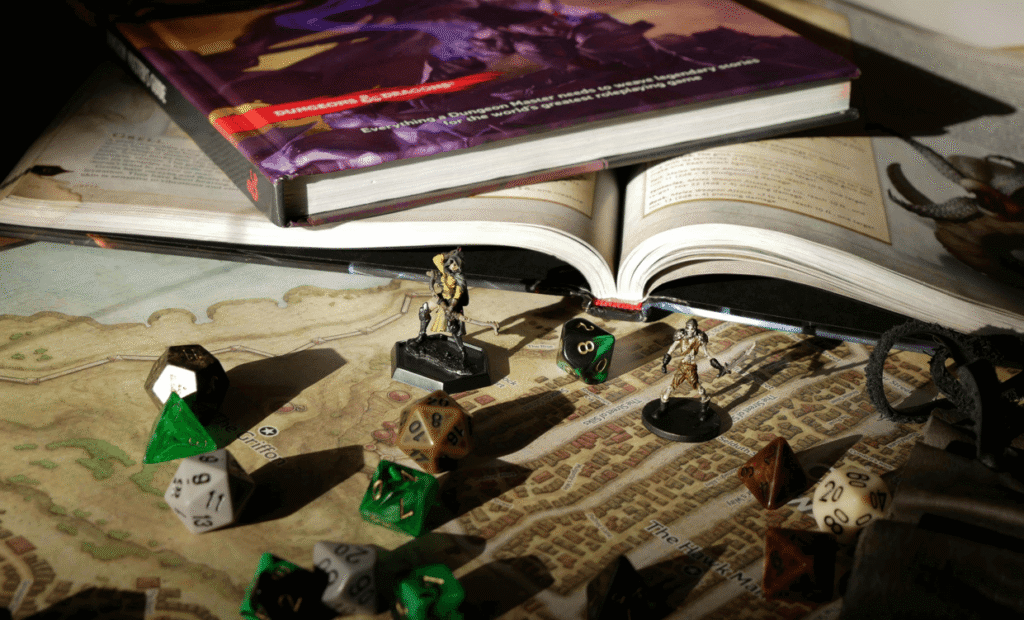
We’ve put together a brief guide to help you get started on your journey to becoming a Dungeon Master. From understanding the basic concepts to creating enemies and choosing starter packs. This guide will walk you through everything you need to kick off your first adventure.
Define your personality as DM
Every dungeon master has its own unique style. And this might sound obvious, but it is actually very important for the development of the story. There is no single “right” way to run a D&D campaign. There are lots of categories, styles and classes for DM’s, however for this part of the guide we’ll follow the categorization from D&D Beyond.
What type of dungeon master do you want to be?
| Dungeon Master Class | |
| The Plotter | Has the plot planned well in advance of the players joining them.Has countless tree branches anticipating everything the players might do. |
| The Panster | They have a pretty good idea of what is going on in their game.They are kind of winging it in reaction to what the players do. |
| Dungeon Master Subclass | |
| Number Cruncher | Follower of the rules, only to be changed or updated when the game’s creators decide it’s time for a new sourcebook to mark the start of a new era. Often called the “rules lawyer”. |
| Rules Sage | Knows the rules inside and out, ready to clarify every situation or doubt. They keep the game fair, consistent and ensure the group can focus instead of flipping through the pages. |
| Vibe Checker | Instead of pausing the game to double-check every detail of an ability or class feature, they trust their gut and go with what feels right in the moment. |
| Beer Holder | Rather than try to protect or warn the party when they collectively come up with the most ridiculous plan possible, they hold their metaphorical beer to see what chaos unfolds. |
| Novelist | They craft a dense, intricate narrative.There’s less room in their stories for wild playing and diversions. They create smaller stories within a larger arc. |
| Taxi Driver | They might take some diversions in the story but ultimately, the players set the destination of the plot. |
The role of Storyteller
Story and adventure structure
The Dungeon Master is the creative force behind a D&D game, the storyteller. They are the voice of the world and adventure. However this does not mean that there’s a need to have every move and scenario written to detail. It is about setting the stage for the players to create a story with them.
Every great story has a structure, even if it’s a loose one. If you need a little help creating your story or organizing the events within it, here is a simple example of a structure you can follow to build your campaign step by step:
- The initial hook.
Begin with a reason for the players to care about the story. Here appears a brief introduction of the word and the motivation for the players to follow the adventure.
- Building the world around your players.
Establish the setting and the context. This includes factions, tone and mood of the campaign.
- Raise the action with challenges and discovery.
Players explore and investigate along the adventure. They face smaller quests that build the main plot.
- The reveal or shift in the plot.
A moment of revelation or change that raises the stakes. Often here, players realise there’s more going on than they think.
- The final confrontation and climax.
The highest point of the campaign. Moment for the “boss battles”. the showdown where everything comes together.
Add your player’s stories
And talking about story-building, it is highly recommended to ask your players for their character’s backstories when preparing the camping.
It helps the DM to personalise the story. It allows the dungeon master to add some NPCs from the characters backstories, making the players more connected to the plot.
Players care more about the story when it connects to their character’s goals and past.
NPCs
“NPC” stands for non-player character. Any character in the game that is not controlled by the players, instead they are played and voiced by the Dungeon Master. NPCs can be allies, regular folk, enemies or even monsters. NPCs during the campaign rarely need much complexity 一 excluding villains and plot-giving NPCs 一 whereas the adventurers are the stars.
Some examples for NPCs are:
- Quest-givers.
- Innkeepers and shopkeepers.
- Rulers and villains.
- Allies and companions.
To build a complex NPC, with occupation, history and abilities, you can consult the D&D Dungeon Master’s Guide.
Scenarios and maps
There are multiple scenarios and maps involved in a dungeons and dragons campaign. While it is not necessary to have a design map for every scene or place your characters are in, it is helpful to have some prepared, especially for combat.
Here are some of the most common scenarios and maps:
- Roleplaying or social interactions. These scenes involve conversation between the party or the party and NPCs. These scenes do not need a physical element on the table. The dungeon master will describe the scenery.
- Exploration and investigation scenarios. Scenarios where players gather clues, question NPCs or explore new lands, or even find magic items. These scenarios focus on deduction, investigation and storytelling.
- Puzzle Challenges. These are more a part of a scene than a map or a scenario. The dungeon master can describe a room or a scenario, but it is recommended to have the puzzle or enigma in physical form. For example a scroll or an object.
- Combat scenarios and maps. One of the most thrilling parts of D&D. Maps during combat are optional, but incredibly useful for visualizing.
Changes and notes
A dungeons and dragons campaign is not a static experience. It is normal to make changes along the way. Maybe the players find an object in another room than was initially planned, or an NPC becomes a dear friend of the party and the Dungeon Master has to play around these changes.
Keeping good notes and knowing how to handle changes will help you stay organised and keep the story alive.
Starter Packs
Starting an adventure in D&D can feel overwhelming, and that is what starter packs are for. Beginner-friendly kits give new players everything they need to learn to start playing.
These starter kits are designed to introduce new players and new Dungeon Masters with no previous experience.
- Lost Mine of Phandelver: a classic adventure set near the town of Phaladalin.
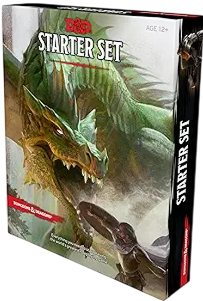
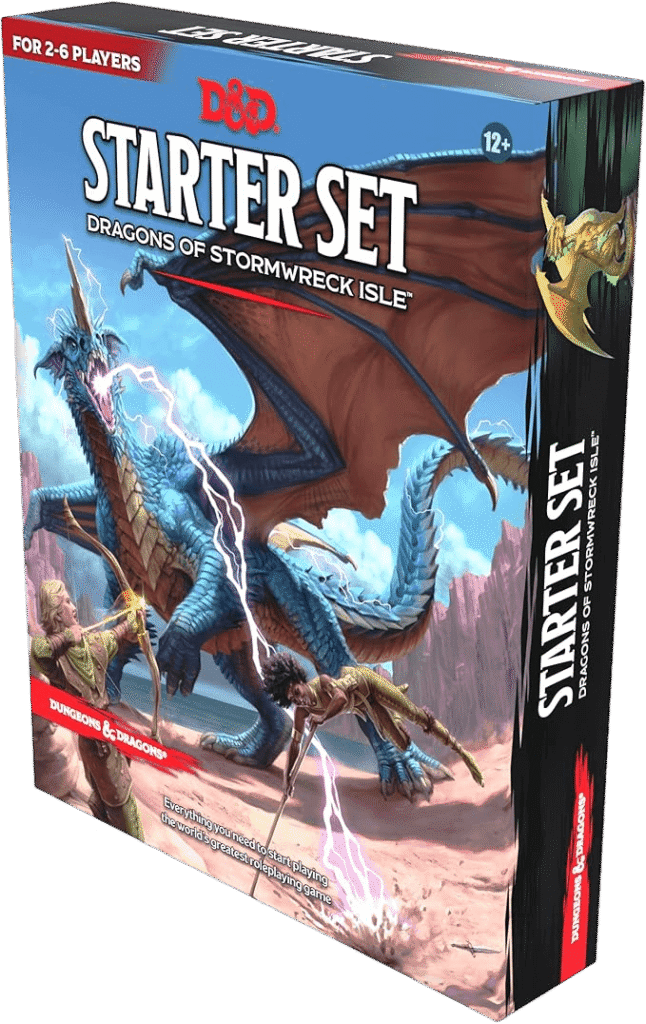
- Dragons of Stormwreck Isle: a newer, updated introduction to D&D with digital resources and a modern tutorial adventure.
Bring your adventure to the table
Table setting
A good table setting is about creating the right atmosphere, comfort and organisation. It is a combination of the right lightning, music, story telling and some physical elements that are needed:
- Everyone should have a set of dice.
- All players should have access to their character sheet, whether it is digital or on paper .
- Miniatures and tokens are optional, but highly recommended during combat.
- Pencils and paper so the players can take notes about NPCs and objects.
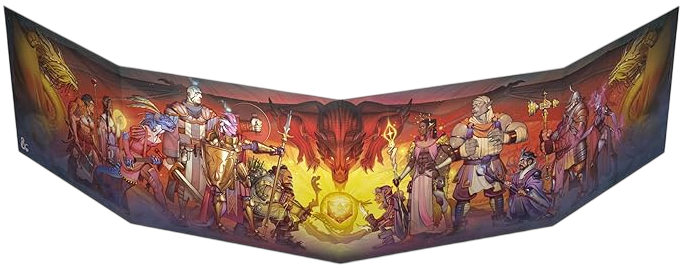
Also, the dungeon master should have a Dungeon Master’s Screen. This is more than just a physical barrier, it is a tool that helps the DM stay organized, manage surprises, and control the flow of the game.
Other elements that can set your players in the mood for the game are drinks, snacks and do not forget to take one or several breaks.
Addressing the players
How the DM talks to the players shapes the entire tone of the campaign. We’ve already explained what classes and subclasses of DM are there. Now we’ll address how the DM talks to the players.
Mainly, the DM has two “voices” during the play:
- Speaking in character. When the DM plays as one of the NPCs. The Dungeon Master will describe the scene, and deliver the dialogue as that character.
- Speaking out of character. Used to explain rule applications, object description or to check in with the players.
Performance and ability checks
These checks are tests to see if a character succeeds at a task that they have decided to attempt.
| Types of ability checks | |
| Strength | Physical Force and athletism |
| Dexterity | Agility, reflexes and balance |
| Constitution | Stamina and health |
| Intelligence | Memory and reason |
| Wisdom | Perceptiveness and willpower |
| Charisma | Social influence and confidence |
Exploration
Exploration is the essence of Dungeons and Dragons, along with combat and roleplaying. As the Dungeon Master you will be the one who makes that sense of wonder come alive. You can use a map to follow their progress as you relate the details of their travels. Tracking this movement, lets the Dungeon Master describe the branching adventurers encounter.
depending on the environment the travel pace can vary:
| Map Travel Pace | |
| Dungeon (1 sq. = 10 ft.) | Slow: 20 sq./min Normal: 30 sq./min Fast: 40 sq./min |
| City (1 sq. = 100 ft.) | Slow: 2 sq./min Normal: 3 sq./min Fast: 4 sq./min |
| Province (1 hex = 1 mi.) | Slow: 2 hexes/hr, 18 hexes/day Normal: 3 hexes/hr, 24 hexes/day Fast: 4 hexes/hr, 30 hexes/day |
| Kingdom (1 hex = 6 mi.) | Slow: 1 hex/3 hr, 3 hexes/day Normal: 1 hex/2 hr, 4 hexes/day Fast: 1 hex/30min, 5 hexes/day |
For more information about exploration mechanics, you can check the Dungeon Master guide.
Inspiration
Inspiration is a special mechanic in Dungeons and Dragons awarded by the Dungeon Master. This mechanic rewards great roleplaying, creativity, or heroic actions. Awarding inspiration is an effective way to encourage roleplaying and risk-taking. Offering inspiration as a reward encourages certain types of behavior in the players. Think of your style as a DM and your group’s preferences, toward the adventure.
❗Remember that a character can have no more than one inspiration at a time.
Become a dungeon master and join the adventure
Stepping into the role of Dungeon Master entails learning a lot about the D&D universe, and we understand that can be intimidating. Many new Dungeon Masters are worried of making silly mistakes or not knowing every rule to the detail.
What truly matters in Dungeons and Dragons isn’t perfection, it’s the adventure. Do not be afraid to make mistakes. It is completely normal to make mistakes, or misinterpret a rule. Enjoy the journey.
Get together with your friends or find your party of new adventurers with gamers.online.
Grab you dice and take your place behind the DM screen, the world you imagine is waiting.
Game on!🧙♂️