
If you are here is because you finally decided to step into the wonderful and chaotic world of D&D. The first step in your journey? Create your character and bring them to life.
Don’t panic! We know it can look overwhelming at first, but don’t worry. In this guide we’ll walk you through how to fill out the character’s sheet in a clear, simple and beginner-friendly way.
Before the character sheet: create your character’s story
Before diving into stats, rules and modifiers, imagine who your character is. Where they come from, what shaped their personality, what drives them, what are their goals, desires and fears. We highly recommend consulting the Dungeons & Dragons Player’s handbook and the spellbook cards if choosing a spellcaster character. You can visit gamers.online to check if your character’s class has a spellbook.
Choose a species
In Dungeons & Dragons, there are different species such as human, elf, dwarf, tiefling, drow, and more. Your character’s species or species will play a major role in shaping their identity, abilities and world view. Each species comes with unique traits like natural resistances, enhanced senses or magical abilities.
When choosing, consider how it fits into your character’s story and personality. Much of your story will naturally be shaped by their species and class.
Choose a class
In Dungeons & Dragons your character’s class defines what they do best, their profession, so to speak. It is one of the most important choices you’ll make when creating your character because it determines their abilities, special features and combat style. Each class has a unique role in the party and offers different play experiences.
When choosing a class for your character, think of what type of role you want to portray. But don’t worry if you are not sure at first, D&D is about growth and discovery, and your character will grow as you play.
Choose a personality and background
The traits in your character’s personality and background will help you bring them to life beyond the stats and combat performance. These elements will shape how the character sees the world and interacts with others. It’s your chance to create a unique individual with motivations and flaws.
The character’s background represents what they experienced before they became part of the party. It gives context to the character’s life, where they are from, what they experienced and how they react to future and present events.
The character’s personality involves bonds, what or who they care about, their ideals, what they believe in, their flaws, what might hold them back.
The Character Sheet for DnD
We’ve reached the part where it’s time to take out the character sheet, our dice, and start filling in our character’s stats and abilities. These three pages, which look more like a résumé than a character description, will help the player understand how their character moves, how they react and what their strongest abilities are.
Page 1: Characteristics and abilities
Character’s general information
Here, the player will write the character’s name, class, level, species and background as decided before when creating the new adventurer, and the player’s name.
Moreover, there’s also the alignment, which reflects their ethical and moral beliefs.
- According to personal freedom, the character can be lawful, neutral or chaotic.
- According to selflessness and selfishness, the character can be good, neutral or evil.
An these can be combined in the following alignments:
| Lawful – Good | Follows the rules and does what’s right. |
| Neutral – Good | Guided by conscience over rules. |
| Chaotic – Good | Acts on personal morals, even if it means breaking the laws. |
| Lawful – Neutral | Follows the laws or codes without moral concerns. |
| Chaotic – Neutral | Follows their own whims, values unpredictability. |
| Lawful – Evil | Uses the law to gain power. |
| Neutral – Evil | Selfish and manipulative, they look for their own benefit. |
| Chaotic – Evil | Destructive and unpredictable. Causes harm for personal gain or pleasure. |
Personality traits, ideals and flaws
In this part of the first page, the player will list the principal personality traits, ideals, bonds and flaws of their character. There is no need to include every detail here, as the character’s full personality traits will be developed on page two of the character sheet.
Stats scores
The Stats scores in a DnD character sheet represent a character’s raw potential in six core areas (strength, dexterity, constitution, intelligence, wisdom and charisma). These scores influence every aspect of the gameplay, from combat attacks to skill checks and spellcasting.
To get these scores, the player can use multiple methods. how ever, the most common are:
- Standard array: a method in which the player gets six fixed numbers (15,14,13,12,10 and 8) and assigns each number to the six abilities. This method is simpler for new players and balanced for all characters. Knowing the character’s class and role, the player should think about and prioritise the most important abilities of their character. For example: for a rogue, their most important hability would be dexterity, for a warlock it would be charisma, for a cleric it would be wisdom.
- Rolling 4d6 method: Also called the 4d6 drop lowest method. This is the classic and most popular way to randomly generate ability scores in Dungeons & Dragons.The way it works is:
- Roll four 6 faced dice. Let’s say the results are the following: 6, 5, 4, 1.
- Drop the lowest dice. From our last example we’ll drop the 1.
- Add the remaining dice together. That would be: 6 + 5 + 4 = 15
- Repeat this for each ability.
- Assign each score to the ability you choose.
As this method can lead to very strong or very weak characters, some DMs (dungeon master) may have the player reroll a stat.
To these results the player adds the racial and class benefits of the character. For example: if your character is a half-orc, you’ll add a +2 in strength. All these characteristics are in the Player’s Handbook. These results will be added to the oval-shape space below each characteristic as the bigger space will be filled by the modifiers for each stat.
Strenght (STR)
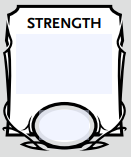
Measures natural athleticism and bodily power.
Dexterity (DEX)
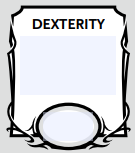
For physical agility, reflexes, balance and poise.
Constitution (CON)
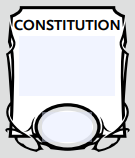
Measures the character’s health, stamina and vital force.
Intelligence (INT)
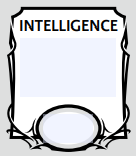
Indicates the mental acuity, information recall and analytical skills of the character.
Wisdom (WIS)
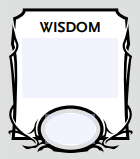
Measures awareness, intuition and insight.
Charisma (CHA)
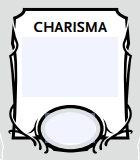
Indicates the confidence, eloquence and leadership of the character.
Stat Modifiers
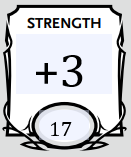
The classic modifier formula is subtracting 10 from the ability score or stat and dividing the result by 2.
For example: (17 – 10) / 2
Here 17 is the character’s ability score. 17 – 10 = 7, and 7 / 2 = 3.5
Round down the result to 3 and the player gets the modifier of +3.
However, this could be a bit complicated for the new player. So you can find the standard modifier chart in the player’s handbook to help you:
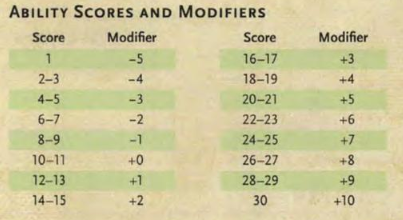
These modifiers are placed in the space above the ability score. For example:
Armor class (AC)
This score represents how difficult it is for an attacker to successfully land a hit on your character. This depends on what armor (if any) the character is wearing, plus other possible modifiers. If the character is not wearing any armor, the armor class will be 10 plus the dexterity modifier.
🎲❗For this score, please check your chosen class as many have different ways to calculate the class armor.
Hit Points
Hit points represent the amount or points of ‘life’ a character has during the game. Each class in Dungeons and Dragons offers a different number of hit points, which determines how much damage a character can take before falling unconscious or dying.
🎲❗You can find this information in the player’s handbook, under the class features of your chosen class.
For example, for a druid:
Hit points for a level 1 druid would be 8 + your constitution modifier.
Hit points at higher levels will add 1d8 (or add the average of 5 points) + your constitution modifier per druid level after 1st level.
Features and traits
In this section of the character sheet, the player writes down the special abilities, class features and racial bonuses of their character. Those characteristics that make the character special beyond the stats and equipment.
🎲❗To check these abilities, consult the species, class, background and level progression of the character.
Other proficiencies and languages
Where the extra skills, tools, languages and equipment of the character are portrayed. These abilities are specific from the species, class, background and level progression of the character.
Equipment
In the equipment section the player writes down any weapons, armor, tools, magic items, money and adventure gear their character has. This section is part bookkeeping and it will also affect how the character interacts with the world and solves situations.
Page 2: Character Lore and background
On the second page, the player writes down the deeper details about the character that will shape their image, personality and backstory. Here is where the character comes to life beyond stats and numbers.
In this section the player explains the character’s appearance, their back story where the origin,ideal,fears and beliefs are included.
Also their allies and organizations. Who the character shares a bond with, or has shared if it’s part of their backstory. It is the player’s resposibility to communicate these bonds and NPC characters the player’s character is related to, so they can potentially add them to the story. These characters could be family members, close friends, former companions, lovers, even enemies.
The treasure section, the player lists all the valuable items the character collects during their adventures , not just gold, but magical artifacts, gems and special loot.
Page 3: Caintrips and spellcasting
If the created character can cast spells, page 3 of the character sheet is where the player will add their spell casting abilities, including caintrips, prepared spells and spellslots. This page is essential to wizards, druids, clerics, warlocks and bards.
Caintrips
These are simple magical spells that the character can cast at will without using spell slots. These are always available. The average spellcaster starts with two to four caintrips, depending on the character’s class. There are different caintrips with different uses, like fire bolt used for damage, or guidance used to boost skill checks.
Spells
Every spell has a level from 0 to 9 and can be versatile tools, weapons or protective wards. Before a spellcaster can use a spell, they must have the spell prepared. The spellcasting ability is based on the character’s class. For example: charisma for bards or intelligence for wizards.
Spells can be divided in spell slots, or how many spells the character can cast per level per day. These slots recover after a long rest, for more classes.
The spell save DC is the number the enemies must roll equal to higher to resist the attack of the spell. If they fail, the spell affects them fully. However, this does not mean that if they succeed the enemy is not affected, sometimes damage is reduced.
This is how to calculate it:
Spell save DC= 8 + proficiency bonus + spellcasting ability modifier
For an optimal use of this page, we recommend:
- List all the prepared spells and caintrips.
- Write down a short description of the spell.
- Organise the spells by level.
- Track the spell slots used during the session.
You are ready to roll!
You’ve done it! Now your character sheet is ready and you are ready to play. You can download the character sheet here. These three pages are a living document, the life of your character. It will evolve as you play, session to session, your adventure will add growth to your character.
Now all that’s left for you is you to get your party together or find new players for your adventure and roll the dice!
Game on!