
Since its launch, Minecraft has evolved far beyond a sandbox video game. It has become a platform for creativity, activism, education, and community-building across the globe.
One of the most powerful examples is The Uncensored Library, created by reporters without borders. Built to provide access to censored journalism from countries where press freedom is restricted.
Another inspiring initiative comes from Stuart Duncan, creator of Autcraft, a carefully moderated Minecraft server designed as a safe space for children and individuals on the autism spectrum.
Beyond activism and advocacy, Minecraft has become a canvas for architects, urban planners, educators and collectives. More than just entertainment, Minecraft continues to serve as a laboratory for ideas. The Sandbox game is a meeting ground for communities, and a safe space for experimentation.
Minecraft just keeps on giving.
Minecraft as a Civilisation and Survival Simulator
For some time now, a new kind of experience has been emerging within Minecraft. One that goes beyond casual multiplayer fun, or a simple test of survival skills. It has become a social experiment, revealing strikingly human behaviors through a digital interface.
We are, of course, referring to large-scale experiments in which vast numbers of players share a single server governed by strict survival rules.
A Format That Has Captivated Audiences
Some of the earlier Minecraft civilization-centric servers running large scale simulations began appearing shortly after the game’s multiplayer mode became popular.
- 2b2t (2010): One of the oldest anarchy servers in Minecraft. With almost no rules, it became an organic social experiment in power, resource scarcity, warfare, alliances, betrayal, and long-term territorial control. While it wasn’t originally designed as a “social or civilisation experiment” in a structured sense, it naturally evolved into one.
- Civcraft (2012): Created by Ian Puyear and intentionally designed as a civilization simulator. It introduced custom mechanics for politics, economy, law enforcement, and nation-building. IT was one of the first structured attempts to turn Minecraft into a political and societal simulation.
Later, between 2020 and 2021, the format for 200 players一and up to 1,000 players一 survive and build civilisation experiments began appearing in Youtube. One of the most identifiable channels being @ish.
In these social experiments, a large group of players spawn in a single location一 an island or an entire continent一and their primary objective is to survive for a set number of days.
What may appear simple from the outside, quickly proves to be far more complex in practice.
The one rule that redefines play
Death is permanent, and there is no possibility of respawning. This uncompromising rule is a cornerstone of these types of experiments. Whether death is caused by another player or by accident, the user who dies is removed from the simulation and has no opportunity to re-enter.
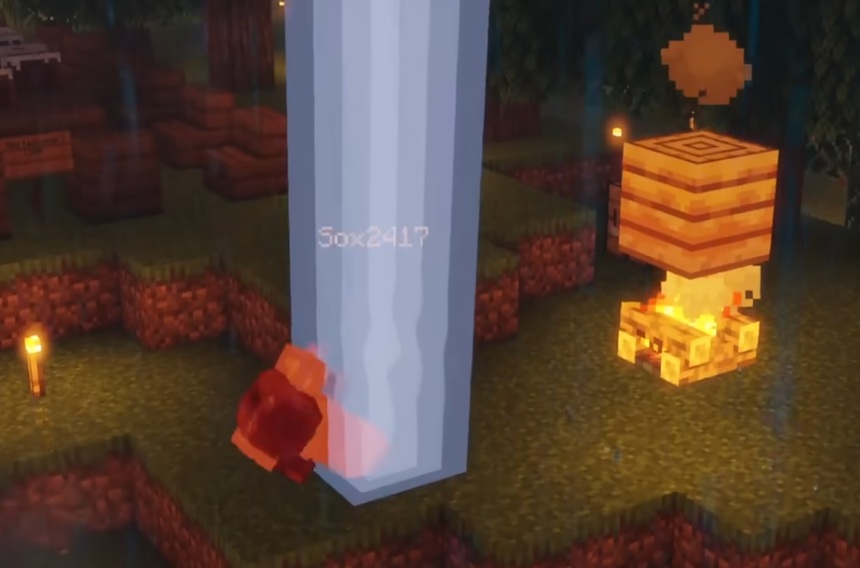
This single condition profoundly shapes player behaviour. It discourages large-scale confrontation due to the risk of not surviving the experiment, encourages the formation of groups for mutual protection, and gives rise to power structures, as well as social and legal systems, within the simulation itself.
From Chaos to Simulated Civilisations
The social progression一from isolation and confrontation to community-building and becoming part of one of these digital civilisations一 can be observed in experiments involving 200 to 1,000 players. Throughout these events, participants receive no guidance or instructions and, of course, there is no possibility of respawning.
From Isolation to Community
During the first days of the experiment, the player population drops sharply for a variety of reasons. The most common cause of death on the first day is spawning in a hostile environment, such as snow-covered biomes or lava-filled areas.
Players soon start migrating to resource-rich zones of the map to craft tools, gather materials, and establish settlement. During this phase, player numbers continue to decline, due to falls from high places, becoming trapped, or attacks by hostile creatures.
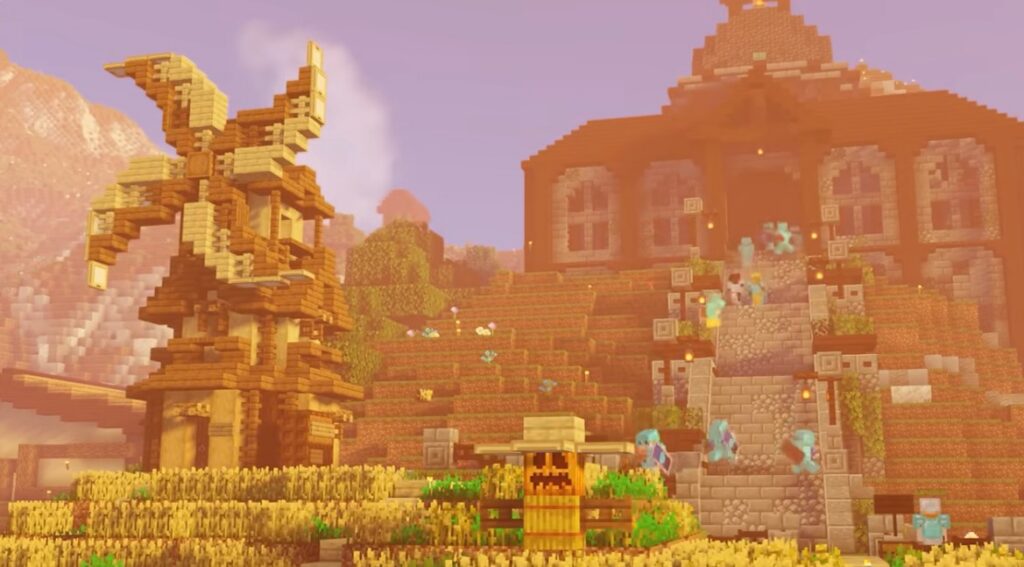
As survivors congregate in the most favorable areas for settlement and resource production, the first signs of community begin to emerge.
Emerging power structures
As the players gather and form communities, it is fascinating to observe how they begin sharing their inventories, grouping resources to construct shelters, fortification, and communal spaces that increase their chances of surviving the remaining days of the experiment. Cooperation becomes essential, and the way resources are distributed often reflects the emerging social norms within the group.
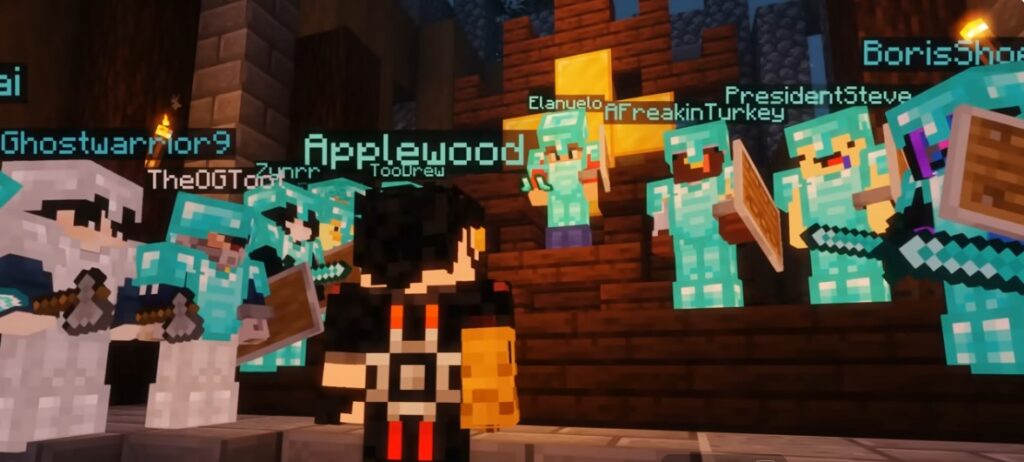
Another intriguing dynamic begins to surface: the development of power structures. Leadership roles naturally emerge, but not everyone can be a leader. Some players assume the role of strategists, others are pointed out as charismatic leaders and the community follows them. Others take on roles as builders, scouts or negotiators. Disputes over authority, decision-making, and risk managing can create new structures like parliaments, or councils.
Over discussions and time, these interactions give rise to complex social systems, that may be purely political, or even around a made-deity, or made-culture. Conflict and cooperation begin to coexist, shaping both the physical environment and the digital society.
Conflicts Between Civilisations
It is when these established civilisations begin to expand that they send scouts to neighbouring settlements, or come in contact with them through territorial growth. At this stage, any decision can drastically alter the balance of power.
If a nation chooses to attack, it can trigger major conflicts, often resulting in a significant drop in the player population. Revolutions remain a constant threat, as dissatisfied users may attempt to overthrow those at the top of the power pyramid.
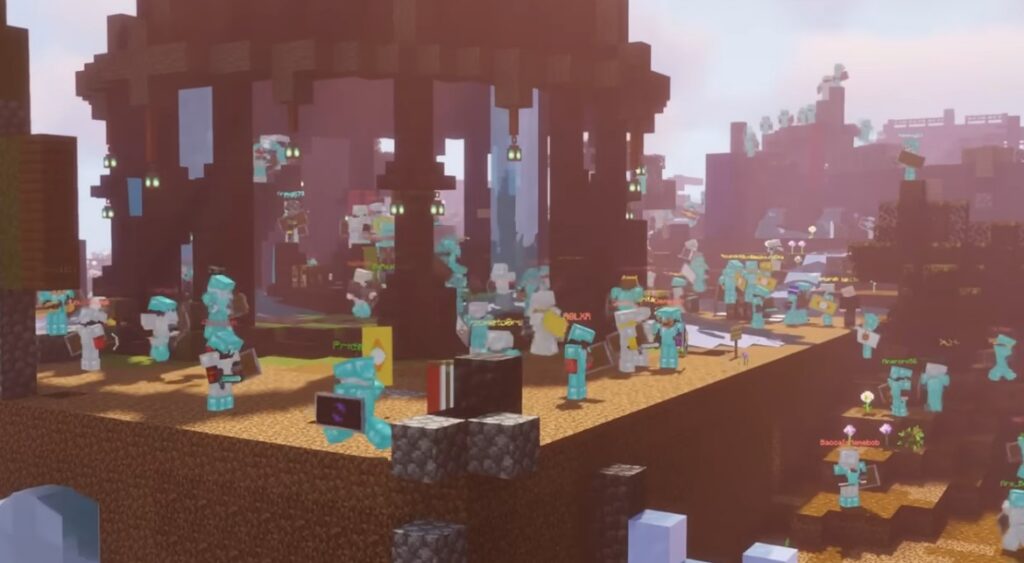
As the days pass and the Experiment approaches its conclusion, civilisations compete for resources and dominance. Alliances are formed and broken, agreements struck and violated. Invasions become commonplace. In this environment, all strategies are valid, and the ultimate goal is clear: To be the last civilisation standing.
Minecraft Meets RP: When Players Become Characters
These social experiments offer a fascinating window into human behaviour through video games. Revealing how individuals navigate cooperation, conflict, leadership and survival under high-stakes conditions. Minecraft transforms into a living lavatory where social dynamics, power structures and communal strategies emerge naturally.
From the gamer’s perspective, these experiments represent a new interpretation and use of the Minecraft sandbox. By integrating role-playing into the core mechanics of resource gathering and management, players are encouraged not only to survive and build, but also to participate. The players will interact with the social roles, negotiate with others and make decisions that affect the collective outcome.
Blending RP and survival mechanics transforms the game into a dynamic social simulation. Have you heard of these social experiments before? Would you like to participate in one?
Find other players that are also interested in this kind of experience and take the first step into your next adventure.
Game on!