
Board game mechanics, stats, and strategies. We’ve analysed and discussed them many times; however, this time we are going to address a different type of board game. A kind of game that will exercise your imagination and unique stories around the game’s journey: these are narrative-driven board games.
Games in which players build a story or a character, and every step of the game elaborates more on the story through scenarios, battles, and decision-making.
⚠️ DISCLAIMER!
Dungeons & Dragons will not be included in this article, as a D&D adventure, while narrative in nature, is fundamentally a role-playing game rather than a narrative-driven board game.
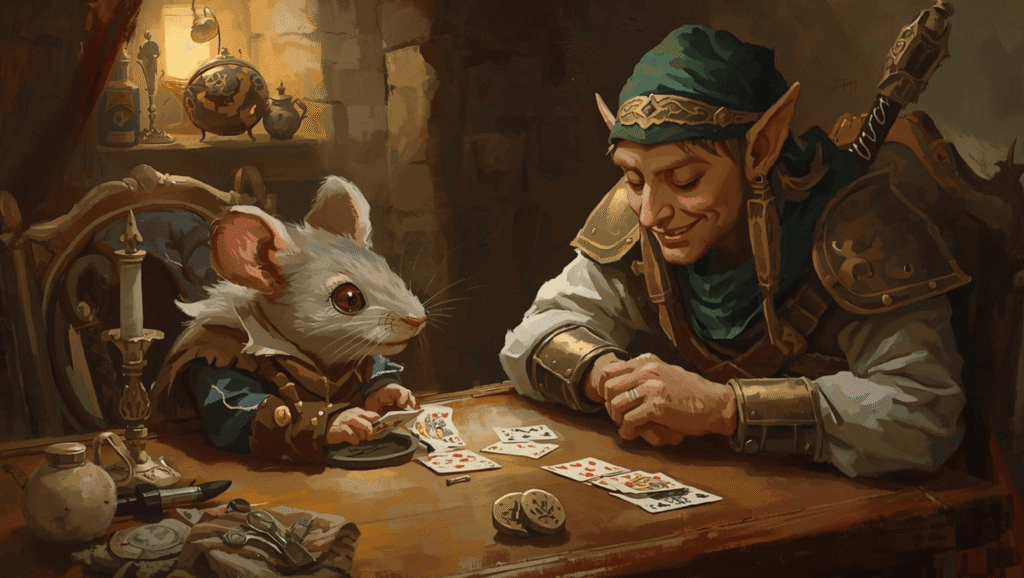
Narrative-Driven: An Unusual Board Game Mechanic
Narrative-driven board games are those games in which the story plays a main role in the playthrough, rather than serving merely as context. In this type of game the other mechanics 一 deck building, dice rolling, or combat 一 become support actions for the main goal, which is keeping the story going. The progress of the game is not measured only in points or objectives, but also in the development of the story.
During these plays, players actively shape the narrative through their choices and interpretations. The game will provide the players with a structure, but the meaning of the different events will emerge from the players’ interpretation, which may involve narrating the character’s journey, reacting to scenarios provided by cards, or deciding how failures or events affect the story.
Narrative-driven board games occupy the space between traditional board games and role-playing games, such as Dungeons & Dragons. These games do not require a dungeon master or pure improvisation and roleplay; however, they require players to think creatively and use their imagination. In this way, narrative-driven board games show that board gaming is more than counting points or elaborating the most efficient strategy 一 it can also be about storytelling.
Two Types of Games Based on Structure
Within this genre, there are two main types of narrative-driven board games, defined by the structure of the game and the level of freedom they offer to the players in decision-making:
Emerging Narrative
A board game in which the story is not pre-written, but emerges from the players’ actions and decisions through the game’s mechanics. In these games, the narrative is fluid and personal, shaped by the players as they interpret cards, symbols, victories, and failures, and give meaning to them.
Guided Narrative
Refers to board games in which the narrative is partially or fully pre-written and unfolds through a structured series of events and scenarios. The players make choices and influence how the narrative progresses throughout the story paths. Players still exercise their imagination; however, the experience is more about following and reacting to the events and encounters.
Must-Try Narrative-Driven Board Games
We cannot discuss narrative-driven games without mentioning some of the most imaginative and entertaining titles, which invite players to create new stories, characters, and adventures.
Call to Adventure
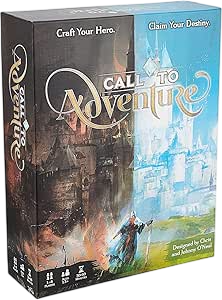
👤Players: 1-4
🕑Duration: 60 min
⚔️Competitive
Call to adventure is a character- and narrative-driven storytelling game, in which players create their own hero by acquiring traits, facing challenges, and overcoming adversaries across three stages, or story decks.
- Origin cards (Act 1)
- Motivation cards (Act 2)
- Destiny cards (Act 3)
To support this narrative-driven design, the game uses a unique rune-rolling system to resolve challenges, alongside a point-based system to determine the winner. This game mechanic makes it an emerging narrative game.
Players must decide whether their character is a hero or an antihero, a choice that will affect which runes they can use in each encounter.
Ending the game and counting points
The game ends when any player has three cards under their destiny card, after which each player takes an extra turn. After this final turn, the players reveal destinies and add up their scores to determine the winner.
When each player has counted their points and the game has a winner, each player takes turns telling their character’s story. The players must describe how their hero or antihero’s character and story cards fit together.
💡To make this game more enjoyable, we suggest introducing a double winner system. Use a token, a trophy or anything you have at hand. The first winner is the player who scores the highest number of points, as defined by the game’s rules. However, the second winner is the player who has created the best story 一 the most engaging, entertaining, or intriguing one. You can put this to a vote, with the winner being crowned the best storyteller.
Once Upon a Time
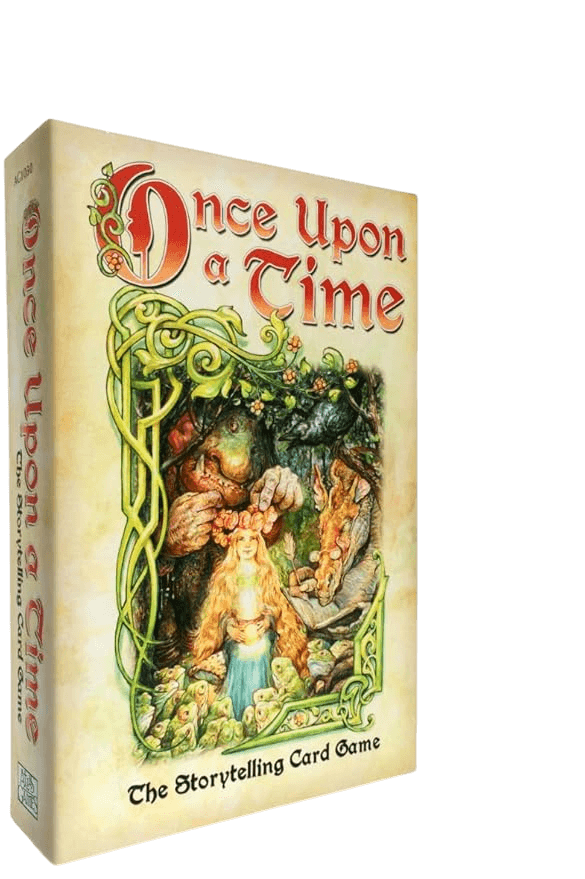
👤Players: 2-6
🕑Duration: 30 min
⚔️Competitive
In Once upon a time, players use cards that show important elements from fairy tales to create a story. One player takes the role of the storyteller, while the rest of the players use their cards to try to interrupt them and become the new storyteller, making it an emerging narrative game. The player who uses all the story cards in their hand and guides the plot to the ending wins the game.
In this narrative-driven board game, the cards are divided into:
- Characters: Cards that picture the people and creatures the action is about.
- Items: The important objects that feature in the story.
- Places: Locations that the characters visit during the story.
- Aspects: Ways of describing the characters, places, and objects in the story.
- Events: What happens to the characters during the story.
- Interrupt: A special card used as normal storytelling cards and they each contain a story ingredient. The players can also use them to interrupt the storyteller.
- Happy Ever After: Each one of these cards contain a possible ending for the story. Players must do their best to fit the story to the ending card they possess.
Ending the Game and Declaring a Winner
When the storyteller has played all of their cards, they may play their Happy Ever After card to bring the story to an end. If this final card provides the story with a coherent and satisfying conclusion, the game and the story are over, and the player who played their ending card is declared the winner.
If the other players feel that the ending card does not fit the story, the storyteller must draw a new ending card from the Happy Ever After deck and one story card from the Once Upon A Time deck. The turn then passes to the player on their left.
Mice and Mystics
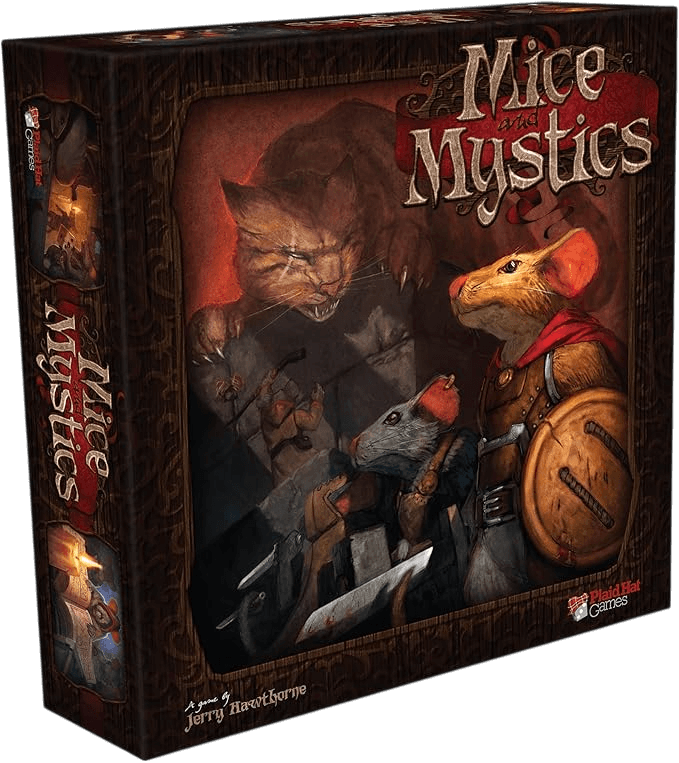
👤Players: 1-4
🕑Duration: 90 min
🤝Cooperative
A cooperative, and narrative-driven board game in which players assume the roles of heroes transformed into mice. The players explore their way through a series of interactive chapters as the story unfolds. This board game is structured around a series of chapters presented in a storybook, which guides players through scenarios, events and dialogue, making this game a guided narrative.
While the use and exercise of imagination remains an important part of play, the focus is on engaging with and progressing through the story.
Winning and Losing at Mice and Mystics
In Mice and Mystics, players select a chapter from the storybook to play through. Each chapter features its own specific victory conditions, and the players must fulfill these conditions before the hourglass marker reaches the chapter-end marker on the chapter-track of the control board.
💡 It is recommended that the chapters are played in their intended sequence. Mice and Mystics can also be played in campaign mode, which allows the players to preserve the progress of their mice from chapter to the next. Moreover, the mice (players) keep their story achievements and abilities earned from previous chapters.
Narrate Your Adventure: Board Games for Storytellers
Board games bring people together through a wide range of experiences. Some appeal to those who enjoy complex mechanics or scoring points, while others are perfect for storytellers, where imagination takes the centre stage.
These games offer a great way to enjoy board play with your most creative friends or family members who prefer experiences that are engaging without being overly complicated in mechanics.
Are you an avid storyteller looking to try these games? Find gamers who share your interest and find your online gaming community at Gamers.Online!
Game on!🐭