
Sure you’ve encountered by now a board game that includes an app-driven narration or tracking. The purpose of this digital element is to support and enhance the gameplay, maybe by introducing the scene, narration, managing rules or acting as the main opponent.
It is comprehensible that, as technology has become more accessible, app-driven games have grown in popularity, offering dynamic storytelling and especially well suited for cooperative and solo experiences, where the app can adapt scenarios in real time.
Are Apps and Board Games Really Compatible?
While some players prefer 100% analog board games, app-driven games are becoming a compelling evolution of the board gaming industry. This new resource merges the tactile joy of tabletop experiences with the flexibility of digital support. It is important to note that app usage in board games is not replacing the original and analog tabletop experience.
The app in these type of board games are often used to enhance the experience and simplify the experience by taking hidden and heavy tasks, such as:
- Game management: Sometimes the app facilitates the players playthrough with complex rules application, scoring, and timing for specific actions. This reduces the time spent in learning the rules and reduces bookkeeping and rule consultations.
- Narration: In this aspect, the app takes the role of the DM and delivers narrative, which often implies voice acting, music, ambiance, and sound effects.
- NPCs and opponents: In cooperative or solo games, when the player or party encounters an NPC or an opponent, the app will take this part to control the challenge and the acting of said character.
- Campaign tracking: With this feature, app-guided boardgames save track of scores, decisions, progress, and character development.
- Accessibility: By automating math operations and rules, making complicated operations easier to learn and play.
So, answering the question “Are apps and board games compatible?”, it all depends on what the player is speaking. Apps can be compatible with board games, but their success depends on how the technology is used.
When integrated, apps must enhance the playing experience and do not overstep on the player’s journey. App-driven games can enable rich narratives, dynamic scenarios, and smooth solo plays.
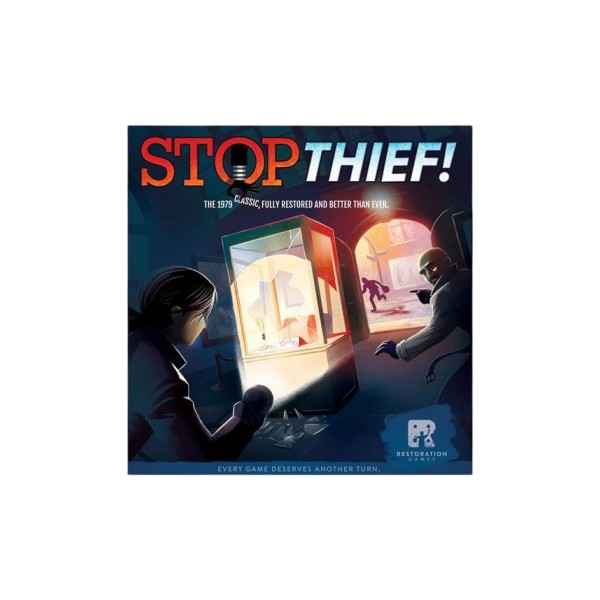
Stop thief!
👤Players: 1-4
🕑Duration: 60 min
🤝Cooperative, 📱App-Driven
Tracking down and arresting the thief is the player’s main goal in this game, playing as detectives, in a game of deduction and pursuit. During the game the players will not see the thief on the board, instead they must deduce where the thief is with the help of audio clues provided by the app.
Players then move around the board, spend action points, and attempt arrests based on logical reasoning.
In this game, the app added to the game playthrough will track the thief’s movement and give clues to the players, while enforcing the rules and movement limitations.
Last Defense!

👤Players: 2-6
🕑Duration: 20 min
🤝Cooperative,📱App-Driven
Players will play as a band of unlikely heroes trying to defend a city from monsters, aliens, robots, and other enemies. In this cooperative board game, the goal is to save scientists, collect tools, and defeat all the incoming threats.
The app will help set up the game and randomise the threat encounters, playing audio cues or on-screen alerts to announce the attacks. It will also display a countdown timer, which the players must watch very closely, as it is the time they have to save the city.
To save time, the app will also update the state of the game and will help track which threats remain.
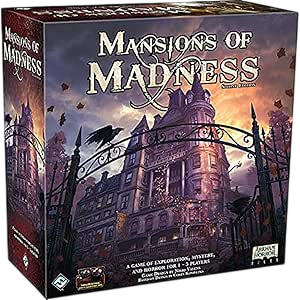
Mansions of Madness (second edition)
👤Players: 1-5
🕑Duration: 180 min
🤝Cooperative,📱App-Driven
Enter this horror-mystery board game where the players take on the roles of investigators, exploring haunted mansions, and dark streets of the lovecraft universe. From the start, the app will let the players choose a scenario and walk them through the set up before beginning the investigation. The app then narrates the scenery and sets the tone of the adventure. Players will need to find clues, solve puzzles, fight monsters, and unravel the hidden story of the location.
In this game, the app enhances immersion, managing hidden information, narrating, and setting the ambiance.
App-Driven Solo Plays: Alive, Reactive and Unpredictable
App-driven board games work especially well in solo plays, setting up scenarios and rules automatically, revealing events, controlling enemies, and tracking stats. Players interact with the app at specific moments while still playing primarily on the table top ambiance.
During the solo play, the app can adjust challenges based on the players performance, introducing branching narratives to respond to the players actions. Also, the music, voice-acting, and sound effects immerses the player into the world of the game and lets him enjoy the emotional journey of the game. Apps allow solo board games to feel reactive and unpredictable, turning a solo ride into a rich adventure where playing against the game feels more alive.
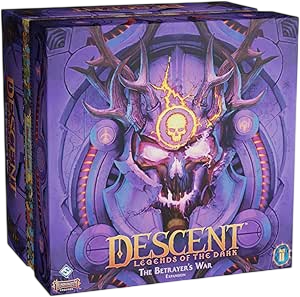
Descent: Legends of the Dark
❗Solo play variation
Descent: Legends of the Dark is a cooperative, app‑driven dungeon‑crawl board game designed for 1–4 players, but it can also be played solo. There isn’t a “solo play manual” which makes it easier if the player has already experienced the game before with other people.
As the companion app is always required, the player will interact with it from the start, for initiating quests, placing tiles on the map, and resolving events. Moreover, outside combat, the player will visit towns, craft items, buy gear, and upgrade their heroes.
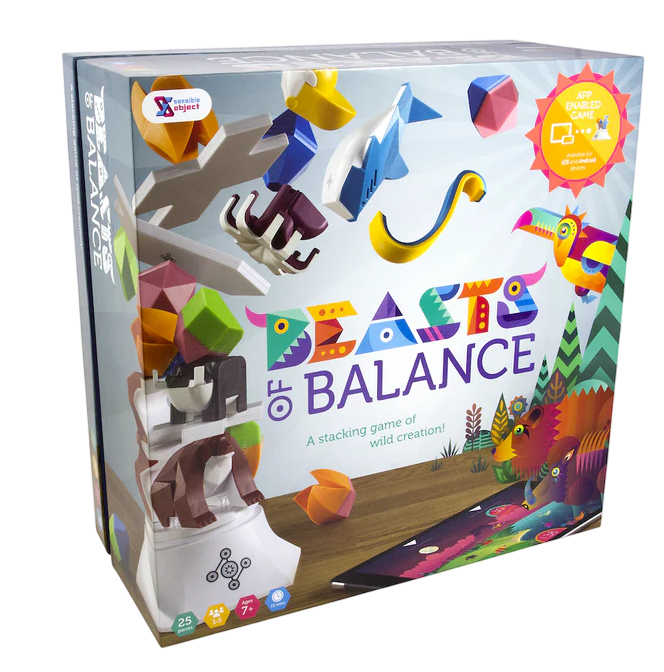
Beasts of Balance
❗Solo play variation
This hybrid physical-digital tabletop game stacks animal and artifact pieces, and those pieces come to life in the companion app as mystical and mythical creatures. This app-driven board game blends dexterity, strategy, and digital interaction into one experience. Moreover, it has no special rules or distinct set up for a solo play.
If the players are using their phones, they will need a bluetooth connection, as a bluetooth‑enabled plinth detects when they place a piece on it and tells the app what was placed. Each artifact and creature is linked to the app.
In solo mode, the player simply stacks the pieces on their own and makes decisions about placement and strategy, while the app responds.
App-Driven Board Games: Yay or Nay?
App-driven board games offer something fresh and new. Merging the traditional tabletop experience with a deeper, smoother transition into the game’s ambiance and also a lighter and earlier method to track progress, scores, and level ups. The line between analog and digital blurs, making games more dynamic and accessible. However, this is not a forced transition, and analog tabletops will continue to exist.
So, what do you think, app-driven board games—yay or nay?
Do you have any of these games in your gamer’s CV? Let us know!
Game on! 👾